
Last updated November 15, 2026
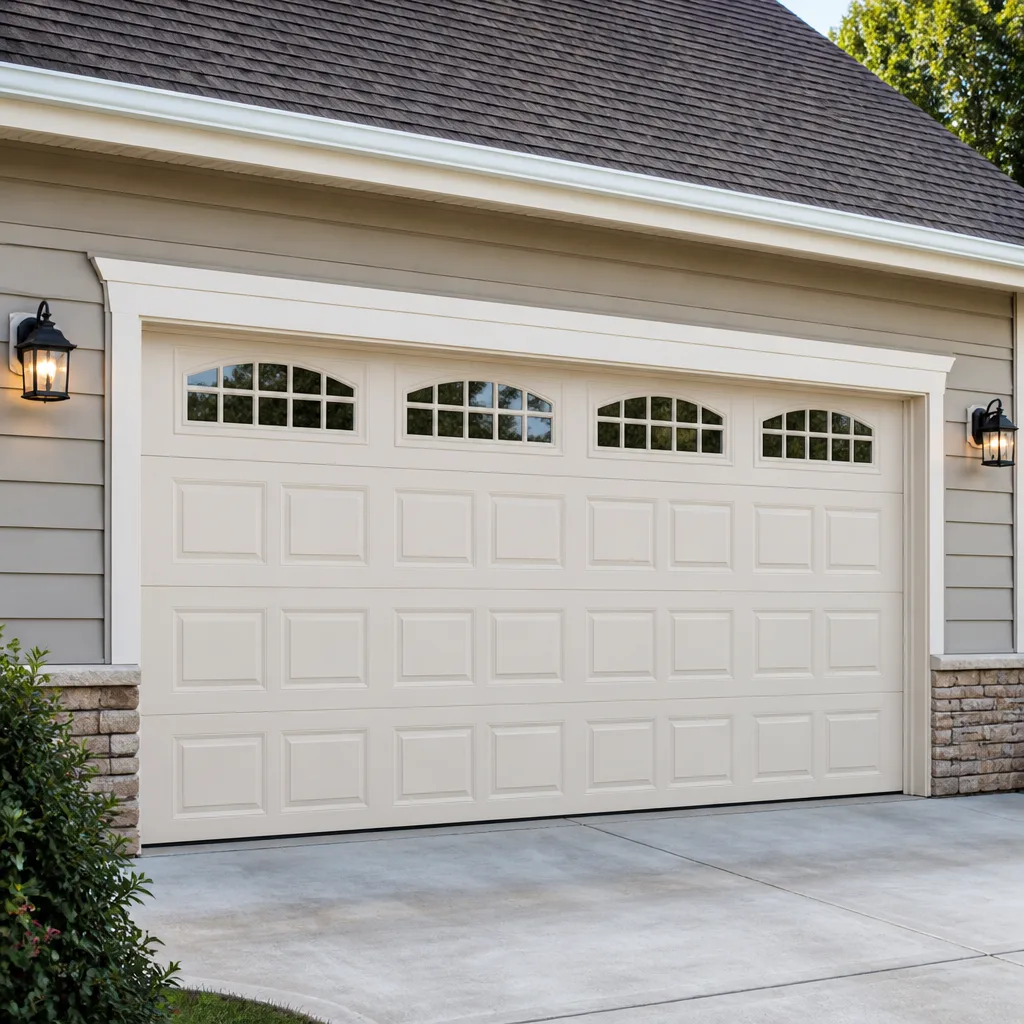 Raised-panel steel
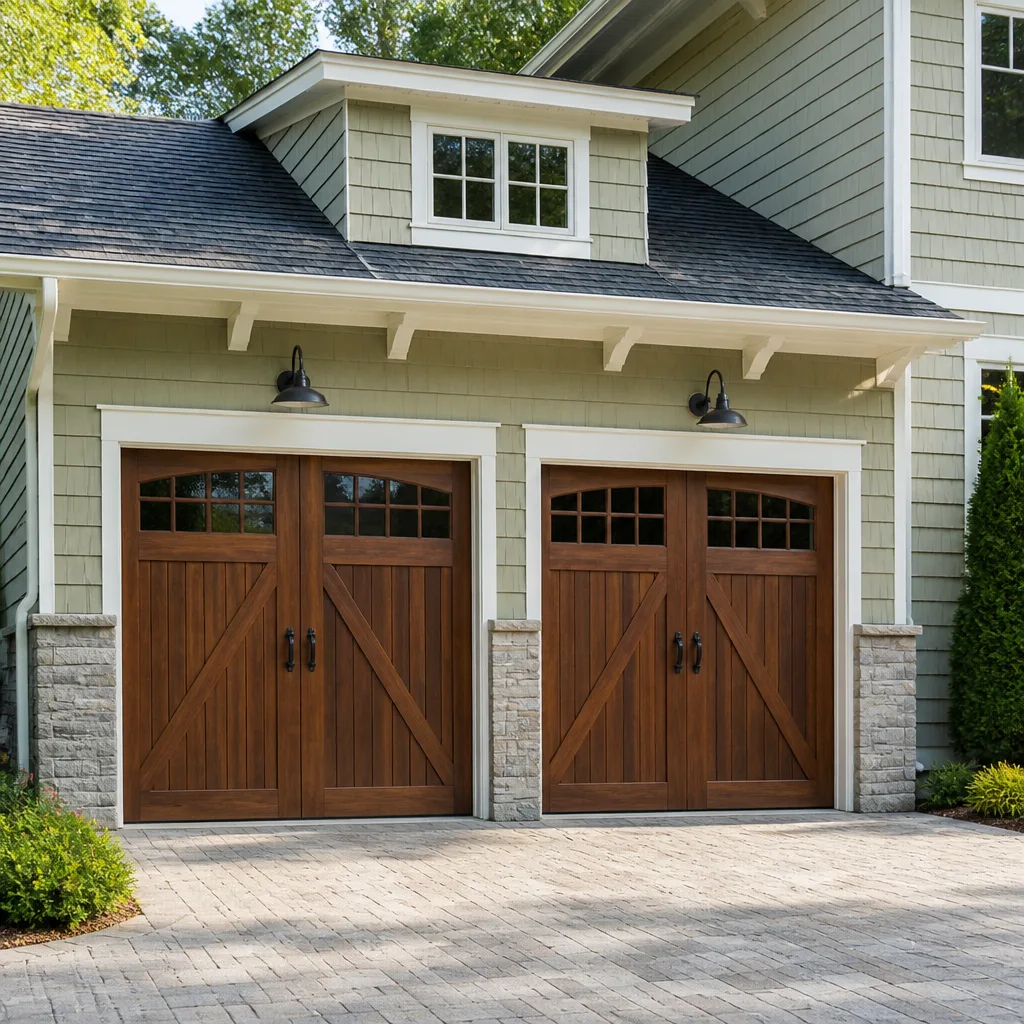 Carriage house
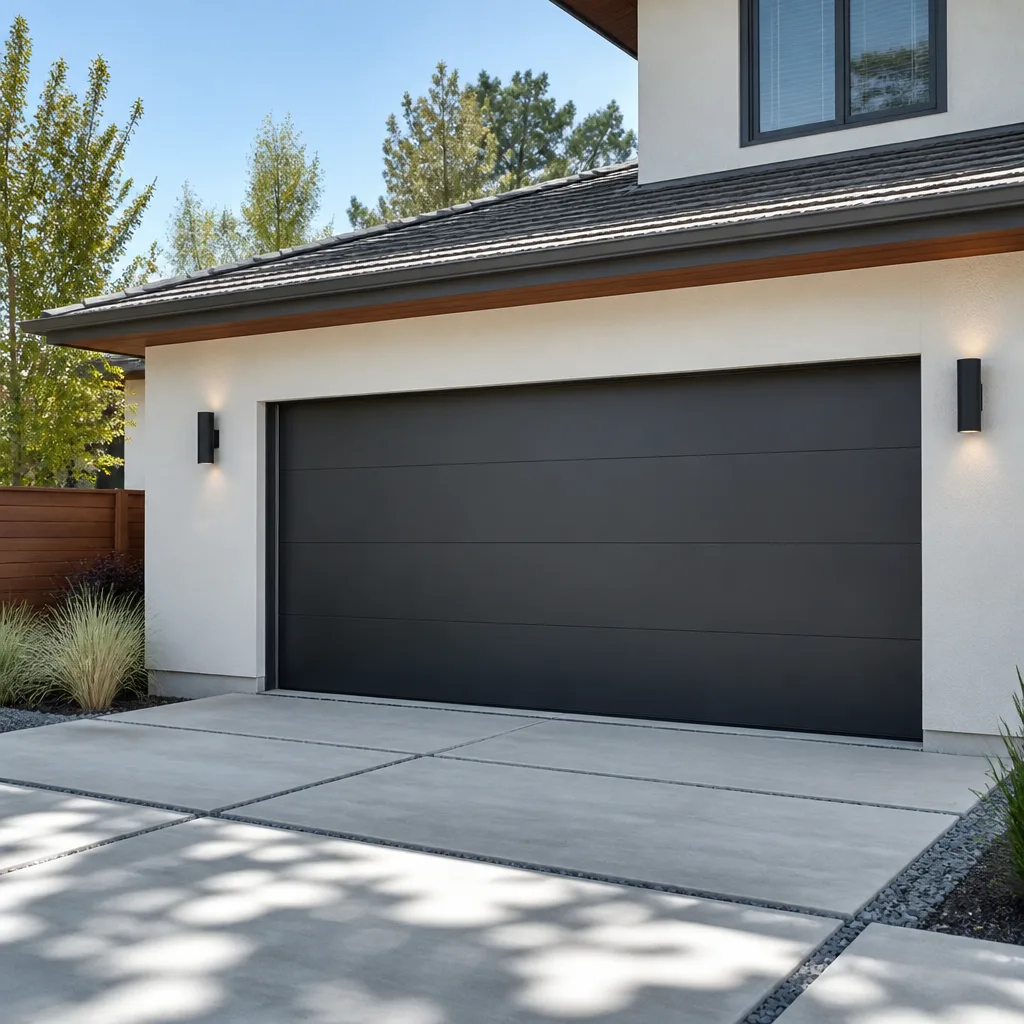 Modern flush
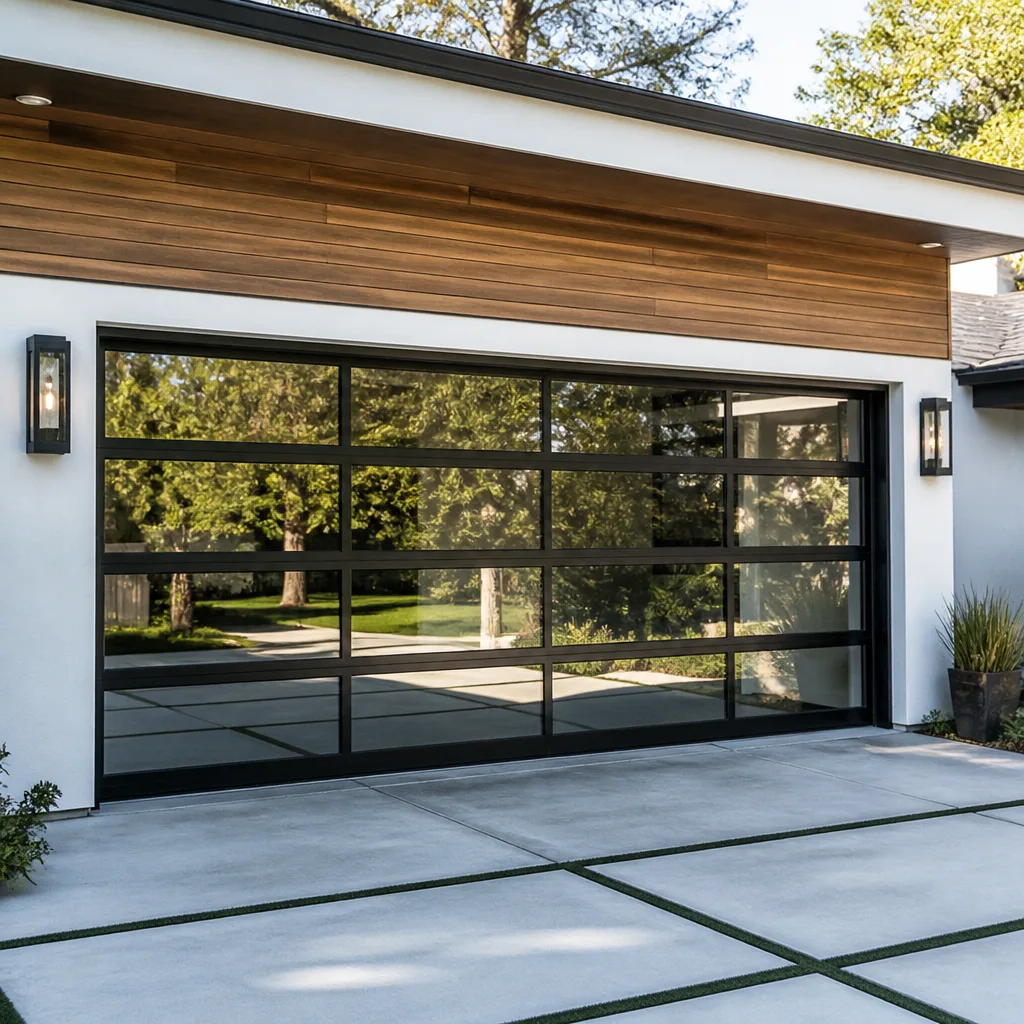 Full-view glass
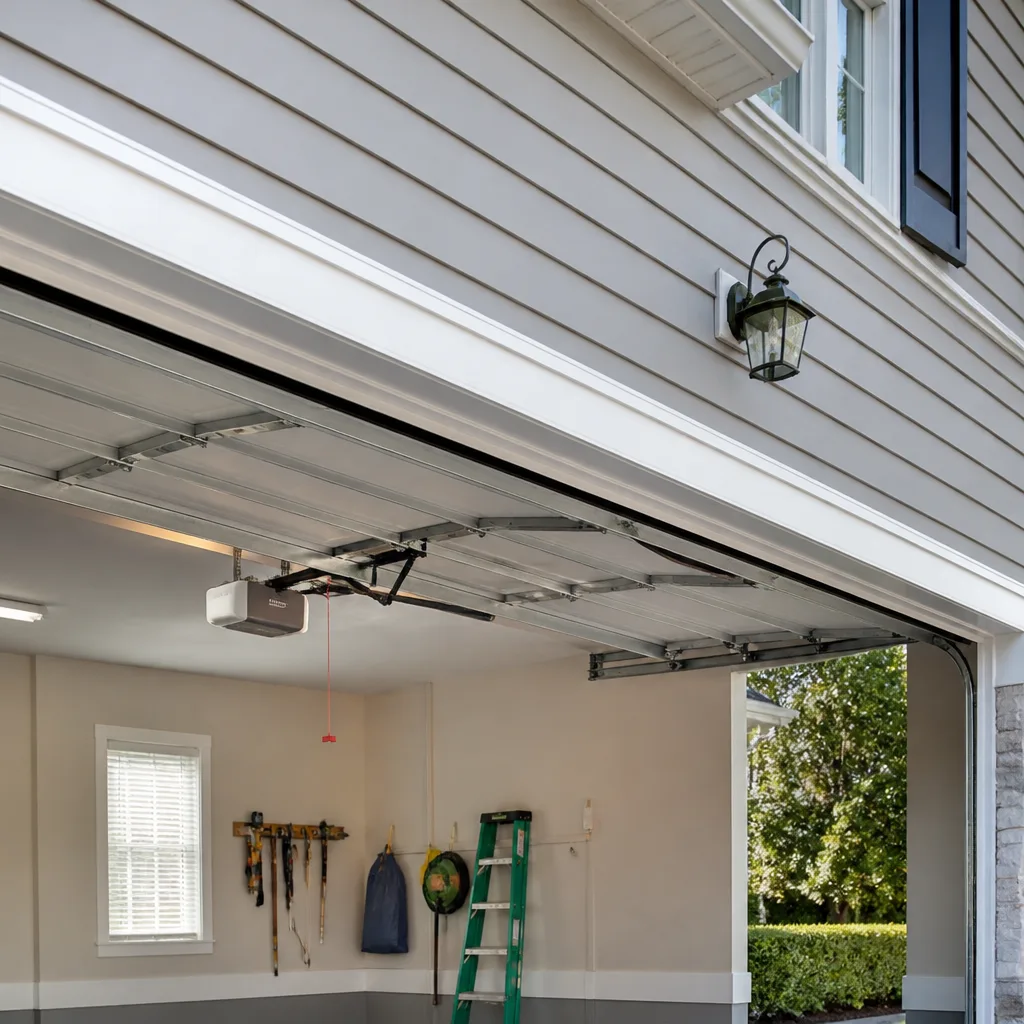 LiftMaster openers
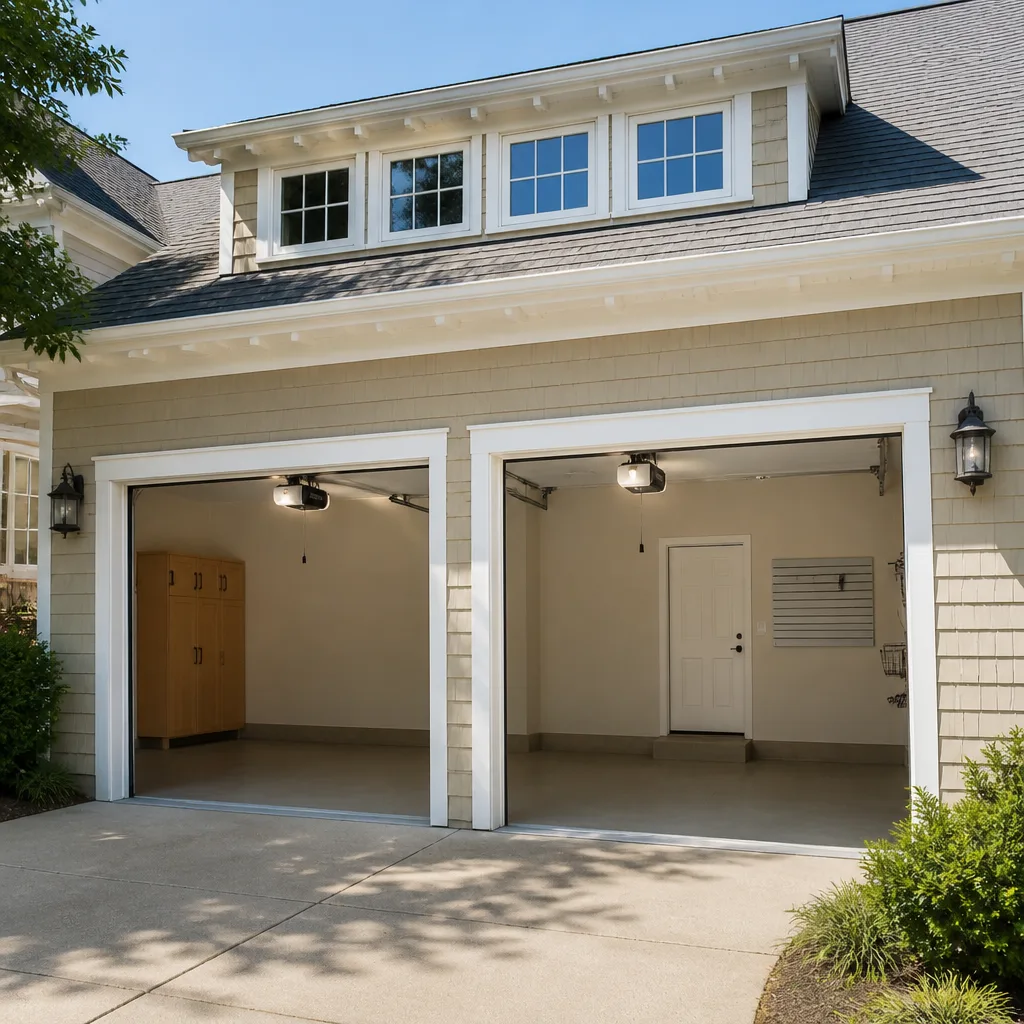 Chamberlain openers
Full 25-point door and opener safety check with every visit - springs, cables, rollers, tracks, and your LiftMaster or Chamberlain opener included
You get a price before we start. It does not change when the pro arrives.
Get your free estimateGarage Door Repair Troubleshooting in Aurora: Common Problems and How to Fix Them
A garage door that reverses before it reaches the floor isn’t “broken” in some vague sense. It’s sending you a specific message, and most homeowners read that message wrong. They blame the safety sensors, book a service call for a sensor problem, and the technician finds the real fault in the travel limits. The same confusion happens with grinding, sagging, and uneven gaps: people chase the symptom instead of the mechanical system causing it. This guide teaches you to read your door’s behavior as a diagnostic language. You’ll learn which parts talk to you through noise and movement, what you can safely check yourself in Aurora, and when to stop and call a specialist.
Quick Answer
Most garage door problems in Aurora trace back to one of five systems: torsion springs, cables and drums, rollers and tracks, the bottom seal, or the opener’s travel and force settings. Your door’s behavior tells you which one is failing, so you can match the symptom to the system and fix the right thing the first time. Anything involving springs or cables under tension is a stop-and-call situation. Everything else starts with a safe visual inspection.
Styles & brands we work with
- Raised-panel steel
- Carriage house
- Modern flush
- Full-view glass
- LiftMaster openers
- Chamberlain openers
Table of Contents
- Why Your Door’s Behavior Is a Diagnostic Language
- Symptom-to-System Map: What Each Behavior Actually Means
- Opener or Door? The Two-Minute Diagnosis
- How Aurora’s Freeze-Thaw Cycles and Fox River Humidity Affect Your Door
- The Safe Stop Checklist: What You Can Touch and What You Can’t
- One-Time Fix or Cumulative Wear? How to Tell
- A Seasonal Troubleshooting Calendar for Aurora Homes
- What Garage Door Repairs Typically Cost in Aurora
Why Your Door’s Behavior Is a Diagnostic Language
A garage door is a balanced machine. Torsion springs carry most of the door’s weight, cables transfer that weight to the drums, rollers guide the panels along the tracks, and the opener supplies only the last bit of force to start and finish the movement. When one component drifts out of spec, the whole system compensates, and that compensation shows up as a behavior you can see or hear. A door that lurches at the halfway point is telling you the springs are losing tension. A door that grinds at the top of its travel is telling you a roller or hinge has worn. The behavior is the symptom. The system is the cause.
This distinction matters because the repair paths are completely different. A sensor realignment, a travel-limit adjustment, and a torsion spring replacement involve different tools, different safety precautions, and different typical costs. Homeowners who skip the diagnosis and guess end up paying for a repair that doesn’t solve the problem. We’ve seen this repeatedly in Aurora: a door gets a new opener when the real issue was a binding track, and the new opener fails the same way within months because the underlying drag was never addressed.
At our Flagship Garage Door Repair, the diagnostic approach starts with brand and model. A Craftsman opener with a chain drive behaves differently from a LiftMaster belt-drive unit, and a Wayne Dalton door with a proprietary torsion system needs a different inspection than a standard Amarr panel door. Our technicians are trained on 8 of the industry’s most widely installed brands, including Amarr, Wayne Dalton, Craftsman, and Raynor, so the diagnosis starts from familiarity rather than from scratch. When you learn to read the language your door is speaking, you stop guessing and start solving.
Symptom-to-System Map: What Each Behavior Actually Means
Here’s the core of this guide: a table-as-list mapping each common behavior to the mechanical component most likely responsible. Use it as your first reference point before you call anyone.
- Door reverses before closing: Most often the travel limits or the down-force setting, not the safety sensors. If the door reverses at the same point every time regardless of obstructions, suspect travel limits. If it reverses only sometimes and at random heights, check the sensors and the sensor wiring.
- Grinding or scraping at the top or bottom of travel: Worn rollers, a dry hinge, or a track that has shifted out of alignment. The noise location tells you which panel and which hardware to inspect.
- Sagging on one side: A cable that has slipped off its drum or a torsion spring that has lost tension on one side. This is a stop-and-call symptom because correcting it means working with components under tension.
- Uneven gap at the floor: A warped bottom seal, a bent bottom panel, or a door that is no longer level in its tracks. In Aurora, the freeze-thaw cycle accelerates seal warping, which is why this symptom shows up most in late winter and early spring.
- Door opens a few inches and stops: Usually a travel-limit setting, a binding track, or a failing logic board in the opener. The two-minute opener-or-door test below separates these.
- Loud bang from the ceiling area: A torsion spring has snapped. Do not operate the door. Call a technician.
- Remote works intermittently: A worn remote battery, a logic board issue, or interference from nearby electronics. This is an opener-side problem, not a door-side problem.
- Door drifts down after opening: Springs have lost tension or the opener’s force setting is too low. Both need a professional look.
Each entry in that list points to a different repair. That’s the point. A catch-all parts list treats every symptom the same way, which is how homeowners end up replacing good hardware. Reading the symptom correctly is the difference between a targeted fix and a repair that comes back within a season.
Opener or Door? The Two-Minute Diagnosis
Before you call anyone, you can determine in under two minutes whether the problem lives in the motorized opener or in the door and its hardware. This matters because the repair path and typical cost are completely different. Here’s the test:
- Pull the emergency release cord. This disconnects the opener from the door and lets you move the door by hand. It’s the single most useful diagnostic step a homeowner can take.
- Lift the door manually to about halfway. A properly balanced door should stay roughly where you leave it, with light effort. If it feels heavy, wants to fall, or wants to rise on its own, the problem is in the door’s spring and balance system, not the opener.
- Push the door back down by hand. If it binds, scrapes, or catches at a specific point, the problem is in the tracks, rollers, or hinges.
- If the door moves smoothly and stays balanced, the door and hardware are healthy. The problem is in the opener: travel limits, force settings, logic board, safety sensors, or the drive system.
In our experience, roughly half the “my opener is broken” calls we diagnose in Aurora turn out to be door-side problems. A binding track or a tired spring makes the opener work harder than it should, and the opener’s safety circuit shuts it down. Replacing the opener without fixing the drag just delays the failure. If your diagnosis points to the opener itself, that’s a separate repair from the door, and it’s what garage door opener repair is built around: treating the opener as the precision mechanical system it is, not as an add-on to a door call.
How Aurora’s Freeze-Thaw Cycles and Fox River Humidity Affect Your Door
Aurora’s weather does things to garage doors that a mild climate doesn’t. The freeze-thaw cycle is the big one. Water collects along the bottom seal and under the door, freezes overnight, expands, and thaws the next day. Repeat that across a winter and the bottom seal warps, cracks, and pulls away from the panel. A gap that opens in February is usually a freeze-thaw gap, not a hardware failure, and it lets cold air and moisture into the garage all spring.
Humidity from the Fox River corridor adds a second stressor. Torsion springs are steel under constant tension, and sustained humidity accelerates surface corrosion on the coils. A spring that might last many years in a dry climate can show pitting and corrosion earlier here, and corrosion is where fatigue cracks start. That’s why the national average spring lifespan isn’t a reliable number for Aurora homes. A spring that’s been in a humid garage near the river will often fail sooner than one in a dry inland garage of the same age. We tell homeowners to watch for corrosion on the coils during a visual inspection; visible rust on the spring is a warning sign worth acting on before it snaps.
The practical implications for Aurora homeowners:
- Inspect the bottom seal each spring for warping, cracking, or gaps. Replacing a worn seal is cheap compared to the water damage and energy loss it prevents.
- Watch for corrosion on the torsion springs, especially if the garage runs humid through summer.
- Lubricate rollers, hinges, and tracks as part of a seasonal routine. Moving parts that dry out bind faster in cold weather.
- Expect bottom-seal and balance symptoms to peak in late winter when freeze-thaw stress is highest.
Those are real Aurora-specific patterns, not generic maintenance advice. A door that struggles every February is often telling you the seal and the balance need attention before the next freeze.
The Safe Stop Checklist: What You Can Touch and What You Can’t
Some troubleshooting is safe for a homeowner. Some is genuinely dangerous. The line is drawn by tension: if a component is under tension, it can hurt you the moment you touch it, and that means springs and cables.
Safe to inspect yourself
- Safety sensors: Check that the two photo-eye lenses at the bottom of the tracks are aligned, clean, and unobstructed. A misaligned or dirty sensor is one of the most common causes of a door that won’t close, and realigning one is a safe DIY fix.
- Tracks: Look for obvious bends, debris, or loose mounting brackets. Don’t try to bend a track back into shape; that’s a technician job.
- Remotes and wall controls: Replace remote batteries and confirm the wall button works. This isolates opener-side problems quickly.
- Rollers and hinges: Visual inspection for cracks, flat spots, or missing hardware. Lubrication is safe. Replacement of a roller is usually safe if the door is fully down and disconnected, but if you’re unsure, stop.
- Bottom seal: Inspect for gaps, warping, and cracking. Note the location; don’t try to replace a torsion-style seal yourself.
Stop and call a technician
- Torsion springs: These are under extreme tension and can cause serious injury if handled incorrectly. Never try to adjust, wind, or replace one yourself, and never touch a spring that has snapped. A snapped spring stores no tension, but the door above it is now unsupported and can fall.
- Cables and drums: Cables are under tension and can snap back with force. If a cable is off its drum, frayed, or loose, do not operate the door.
- Anything requiring the door to be raised and held: A door that isn’t balanced can come down on its own.
The safe stop rule is simple: if the part is spring or cable, stop. Everything else starts with a visual inspection at the door down and the opener disconnected. Knowing where that line is protects you and keeps the diagnosis honest. When a symptom crosses the line, garage door repair is the call, and a trained technician handles the tension side of the system safely.
One-Time Fix or Cumulative Wear? How to Tell
Here’s a pattern worth understanding. A door that reverses, you reset the opener, and it works again is not fixed. It’s telling you the root cause is still there. A door that worked after a manual reset once will fail again within about 60 days if the underlying problem, whether a binding track, a tired spring, or a drifting travel limit, isn’t addressed. The reset masks the symptom. The system keeps failing.
Distinguishing a one-time fix from cumulative wear comes down to a few questions:
- Does the symptom return at the same point? A reversal at the same height every time points to a fixed mechanical cause like travel limits or a track bind. A random reversal points to sensors or wiring.
- Is there a pattern across seasons? Symptoms that only appear in cold weather point to seal warping or a spring that’s lost tension as temperatures drop. Those come back every year unless the part is replaced.
- Is the hardware visibly worn? Rust on springs, flat spots on rollers, and frayed cables are cumulative wear. They don’t self-correct.
- Has the door been reset more than once for the same symptom? If you’ve reset it twice for the same behavior, the system is telling you the root cause is mechanical, not electronic.
- Does the door balance correctly by hand? Run the two-minute test again. If the door doesn’t hold position, the balance system is the root cause and no amount of resetting will fix it.
Cumulative wear is the norm on doors older than about a decade, especially in a climate like Aurora’s where freeze-thaw and humidity accelerate corrosion and seal degradation. The useful question isn’t “did the reset work?” It’s “why did the door need a reset in the first place?” Answer that and you fix the right thing.
A Seasonal Troubleshooting Calendar for Aurora Homes
Garage door problems in Aurora follow the calendar. Knowing what to expect each season helps you catch small issues before they become repair calls.
- Late winter (February and March): Freeze-thaw stress peaks. Watch the bottom seal for warping and gaps. Reversals and balance problems are most common now. If the door started struggling in January, it usually gets worse by March.
- Spring (April and May): The thaw exposes what winter did. Inspect the bottom seal, check for corrosion on springs, and test the door’s balance by hand after disconnecting the opener. This is the season to catch freeze-thaw damage before summer humidity sets in.
- Summer (June through August): Fox River humidity is highest. Watch the springs for new surface rust. Lubricate moving parts. Openers run hotter and can trip their thermal protection on the hottest afternoons; a door that stops working on a hot day and recovers later is often an opener thermal issue, not a door failure.
- Fall (September and October): The best time to prepare for winter. Lubricate rollers, hinges, and tracks. Replace a worn bottom seal before it freezes. Check that the door closes fully and seals evenly.
- Early winter (November and December): Confirm the door’s balance and travel limits before the first hard freeze. A door that closes unevenly in November will gap worse by January.
A seasonal walk-around takes a few minutes and catches most cumulative wear before it becomes an emergency. If a check crosses the safe-stop line, that’s when to call. In our experience, the Aurora homeowners who stay ahead of the seasons spend less on repairs and get more years out of their existing system.
What Garage Door Repairs Typically Cost in Aurora
Pricing for garage door repair in Aurora depends on which system the diagnosis points to, which is another reason to read the symptom correctly. Here’s a typical range breakdown by repair type:
- Safety sensor realignment or replacement: At the low end of repair pricing. Often the simplest fix once the diagnosis is confirmed.
- Roller and hinge replacement: Also in the low-to-middle range, depending on how many rollers and how much of the hardware is worn.
- Travel-limit and force-setting adjustment: A straightforward opener-side repair, typically at the low end.
- Bottom seal replacement: Middle of the range, and worth doing in Aurora before winter rather than after freeze-thaw damage sets in.
- Torsion spring repair: A step up from the small hardware repairs. A single spring and a matched pair are priced separately, and a pair costs about twice a single spring because both are replaced together.
- Cable repair: Comparable to spring repair in complexity because the cable works with the spring and drum system under tension.
Get a written estimate before any work starts. The written quote is the price, and estimates are free. If your door has more than one failing system, a good technician will lay out what’s urgent and what can wait so you can decide. For a new door or a full replacement, the number depends on the door and is set after a measure and a written price, not over the phone.
Call (866) 983-4312 for a free estimate. We answer 24/7. Fast dispatch from 7am to 7pm, Sunday through Friday. For more on the local area, see Aurora.
Common Mistakes to Avoid
- Blaming the safety sensors for every reversal. If the door reverses at the same point every time regardless of obstructions, the travel limits or down-force setting is the likely cause, not the sensors. Check the behavior pattern before you touch the lenses.
- Replacing the opener when the door is the problem. A binding track or a tired spring makes the opener shut down. Run the two-minute balance test first, or you’ll pay for a new opener that fails the same way.
- Ignoring a warped bottom seal through a second winter. In Aurora, a seal that gaps in February lets cold air and moisture in all spring and gets worse the next freeze-thaw cycle. Replacing it is a small fix compared to the water and energy issues it prevents.
- Resetting the opener and calling it fixed. A door that worked after a manual reset once will fail again within about 60 days if the root cause isn’t addressed. The reset is a diagnostic clue, not a repair.
- Touching springs or cables yourself. These are under tension and can cause serious injury. The safe stop rule exists because no homeowner repair is worth that risk.
- Bending a track back by eye. A twisted track causes rollers to bind and the door to run unevenly. Bending it by hand usually creates a new problem at the bend. Let a technician replace or properly align it.
- Skipping the seasonal check. Most cumulative wear in Aurora shows up in fall and late winter. A few minutes of inspection each season catches it before it becomes an emergency call.
See the difference
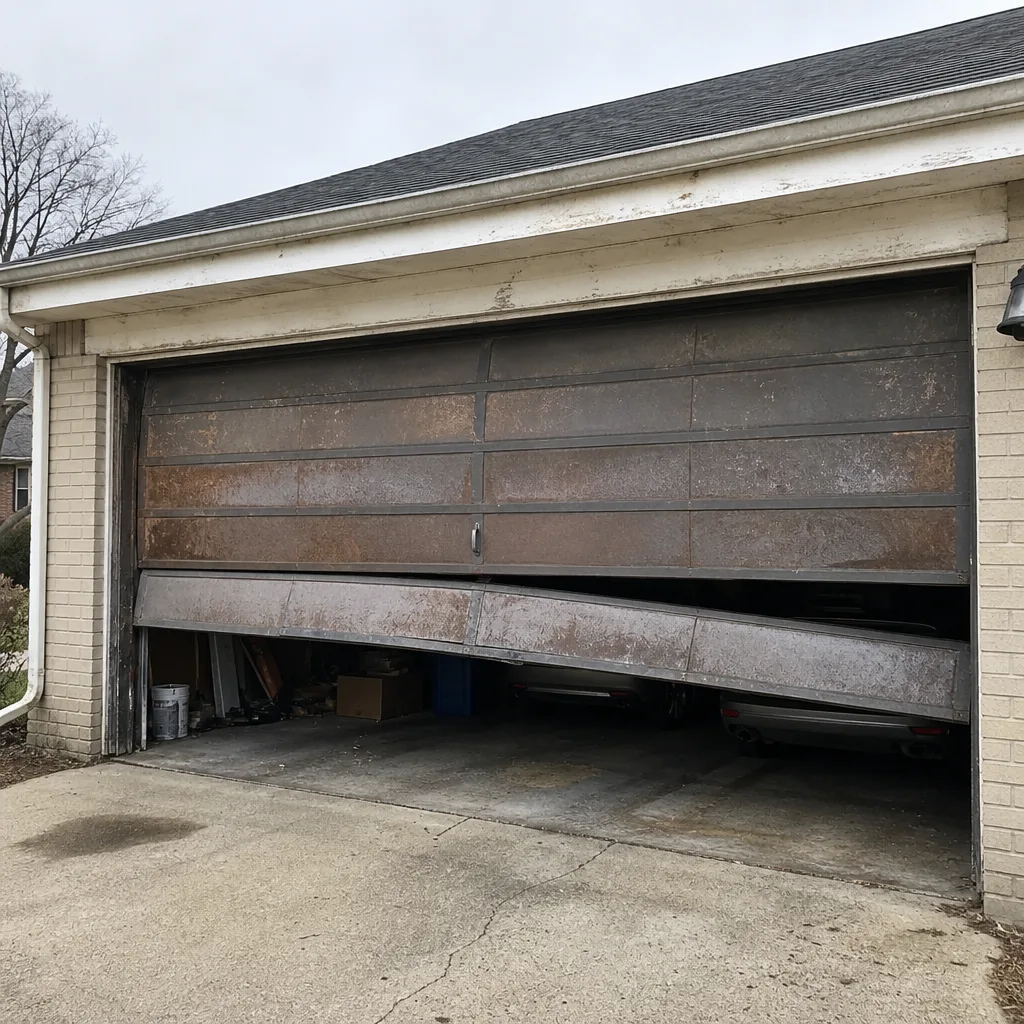 Before
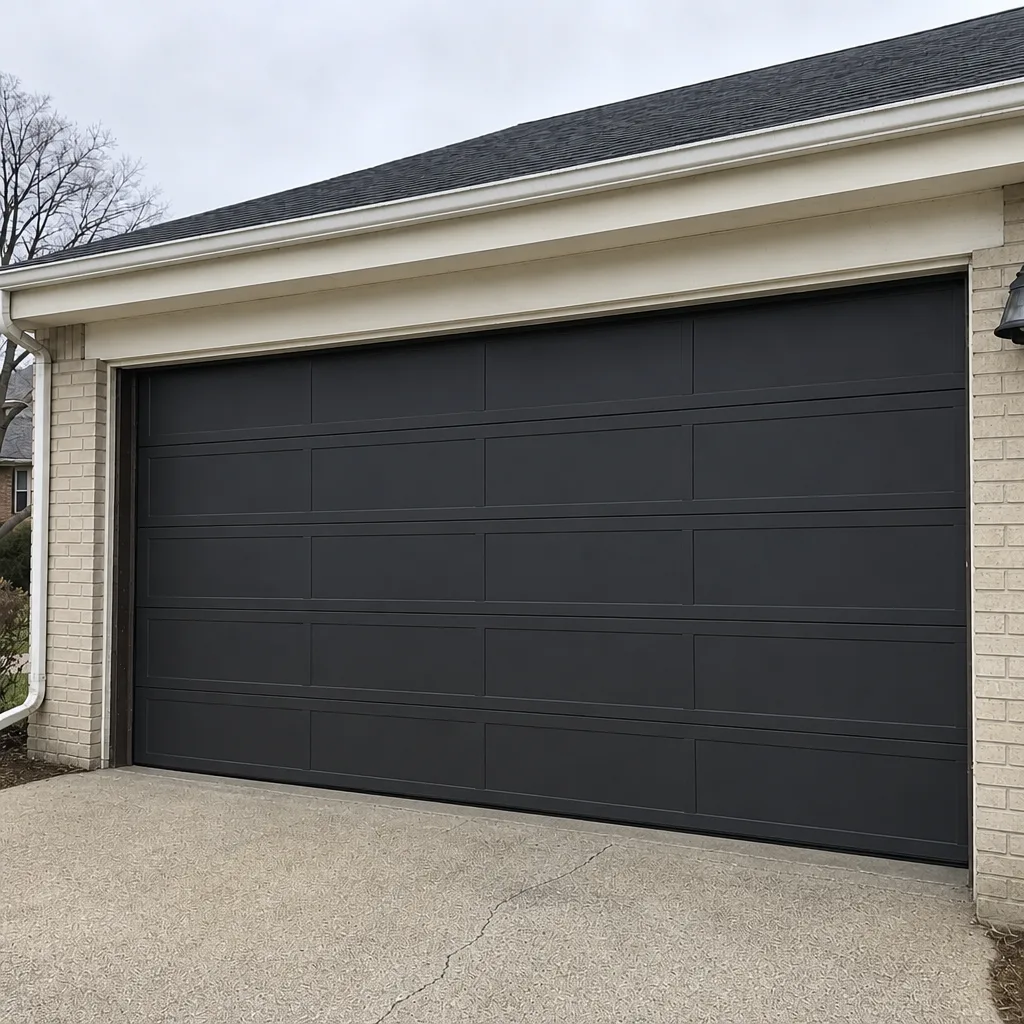 After
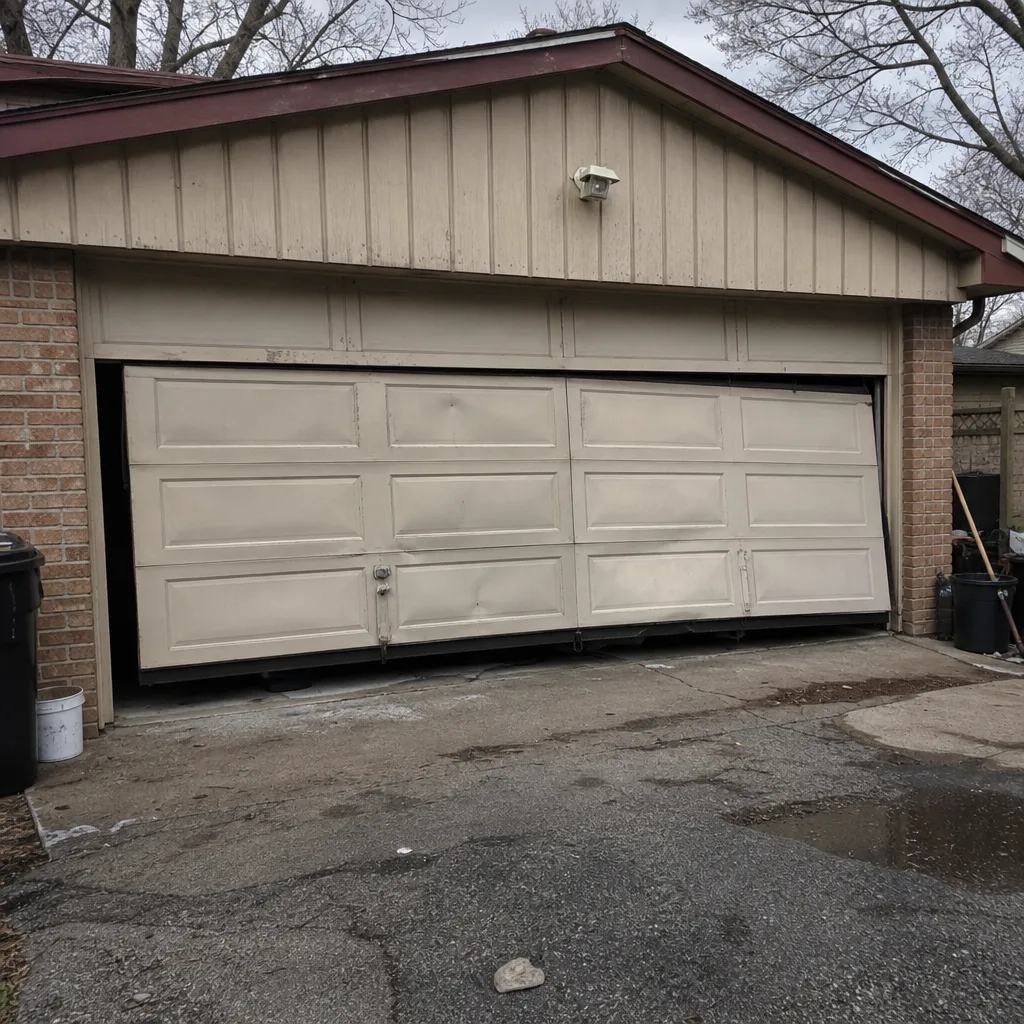 Before
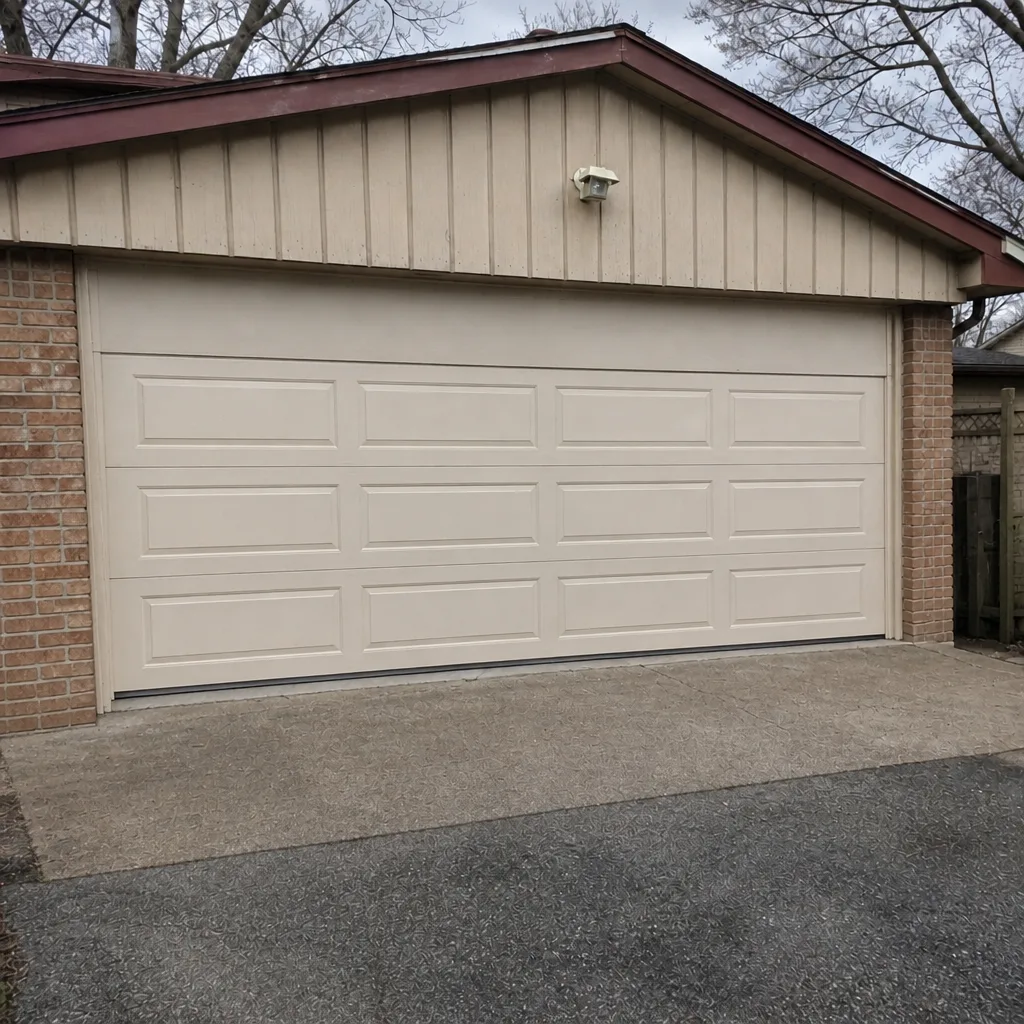 After
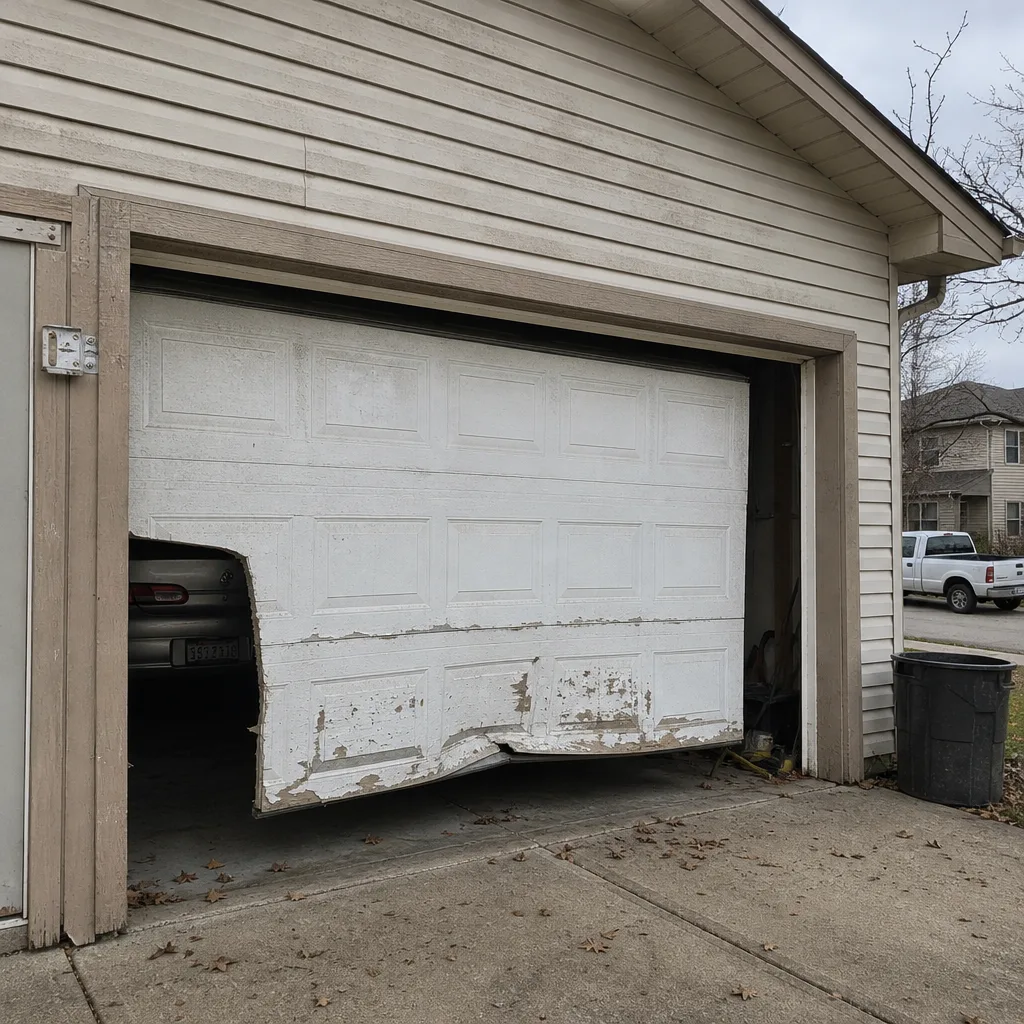 Before
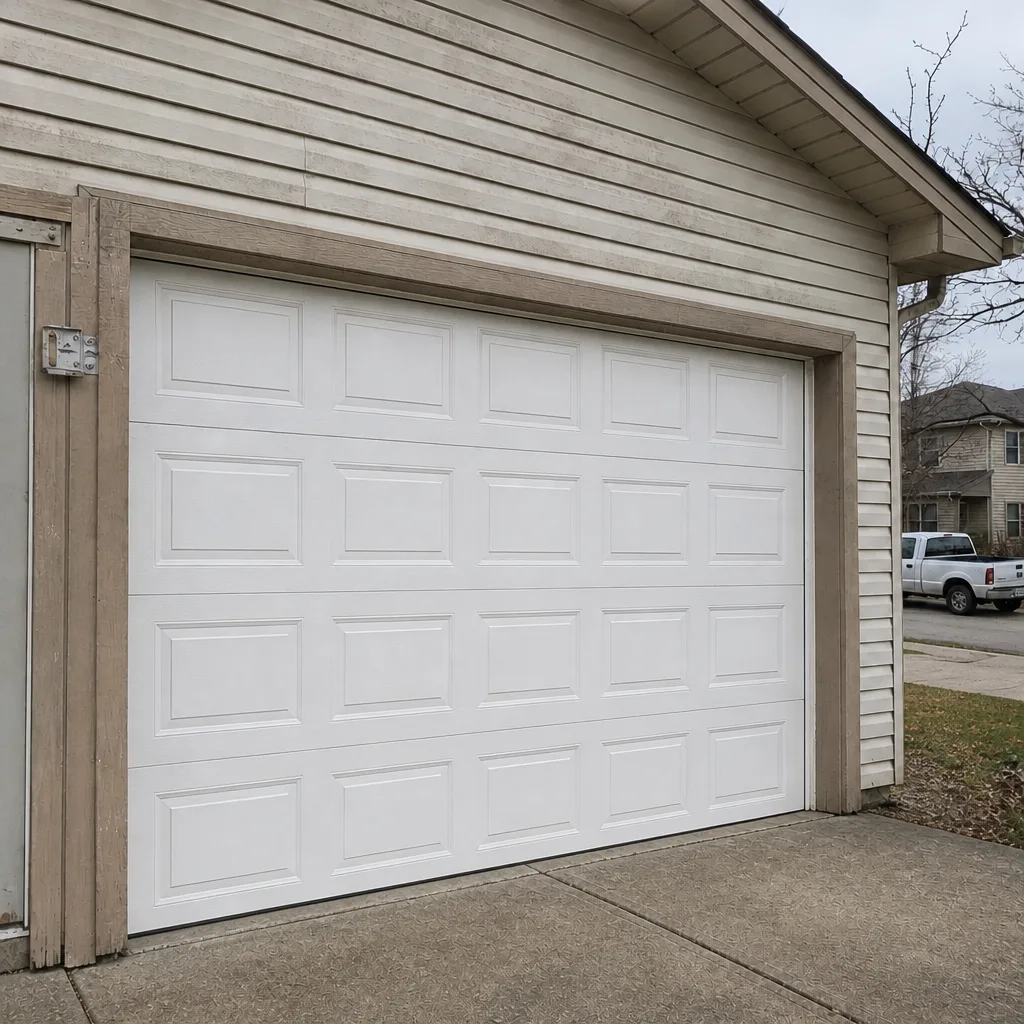 After
When to Call a Professional
Call a professional the moment a symptom crosses the safe-stop line, meaning anything involving springs, cables, or a door that won’t hold its balance. Also call if the door has reversed or failed more than twice for the same symptom, if a snapped spring has left the door unsupported, if the door is visibly off its tracks, or if you’ve run the two-minute opener-or-door test and the result points to a mechanical cause you can’t safely address. And call if you’re not sure: a quick diagnosis over the phone or in person prevents the guess-and-replace cycle. Flagship Garage Door Repair offers free estimates in Aurora, and our technicians have up to 10 years of experience on the systems in your home. Call (866) 983-4312. We answer 24/7. Fast dispatch from 7am to 7pm, Sunday through Friday.
Frequently Asked Questions
The most common cause is a travel-limit or down-force setting, not a safety sensor problem. If the door reverses at the same point every time, suspect the travel limits. If it reverses randomly, check the sensors and their wiring. Call (866) 983-4312 for a free estimate once you know the pattern.
You can usually tell in under two minutes on your own using the balance test: disconnect the opener, lift the door by hand, and see if it holds position. A heavy or unbalanced door points to the door system. A balanced door that won’t move points to the opener. Call (866) 983-4312 for an exact quote once you’ve run it, and estimates are free.
Typical costs range from small sensor and hardware fixes at the low end up to torsion spring and cable repairs, which cost more because the parts work under tension and are replaced as a matched pair when both are worn. The written estimate sets the final price, and it’s agreed before any work starts. Call (866) 983-4312 for a free estimate.
No. Torsion springs are under extreme tension and can cause serious injury if handled incorrectly, and a snapped spring leaves the door unsupported. Keep the door closed, keep hands clear, and call a trained technician. Call (866) 983-4312. We answer 24/7. Fast dispatch from 7am to 7pm, Sunday through Friday.
Freeze-thaw cycles are the cause. Water collects along the bottom seal, freezes, expands, and thaws, and repeated cycles warp and crack the seal. Fox River humidity adds corrosion stress on the springs at the same time. Replacing a worn seal before winter is the practical fix, and a technician can confirm whether the door also needs a balance adjustment. Call (866) 983-4312 for a free estimate.
No. The price is quoted and agreed before any work starts, and estimates are free. If the diagnosis turns up more than one failing system, a technician will lay out what’s urgent and what can wait so you decide what gets done. Call (866) 983-4312 for an exact quote.
The Bottom Line
Your garage door’s behavior is a diagnostic language. A reversing door, a grinding door, a door that sags on one side, and a door with an uneven gap are each pointing to a specific system: travel limits, worn rollers or track, cables or springs, and the bottom seal. Read the symptom correctly and you fix the right thing the first time. In Aurora, freeze-thaw cycles and Fox River humidity accelerate seal warping and spring corrosion, so seasonal inspection pays for itself. Anything involving springs or cables under tension is a stop-and-call situation. Everything else starts with a safe visual inspection and the two-minute balance test. When the diagnosis points to a repair you can’t safely do yourself, call the specialist.
Flagship Garage Door Repair offers free estimates in Aurora. Call (866) 983-4312. We answer 24/7. Fast dispatch from 7am to 7pm, Sunday through Friday. From a snapped spring to a brand-new door, we handle the repair, the opener work, and the installation, and our technicians are trained on 8 of the industry’s most widely installed brands so your specific system gets the right fix.
Written by the team at Flagship Garage Door Repair.