
Last updated November 15, 2026
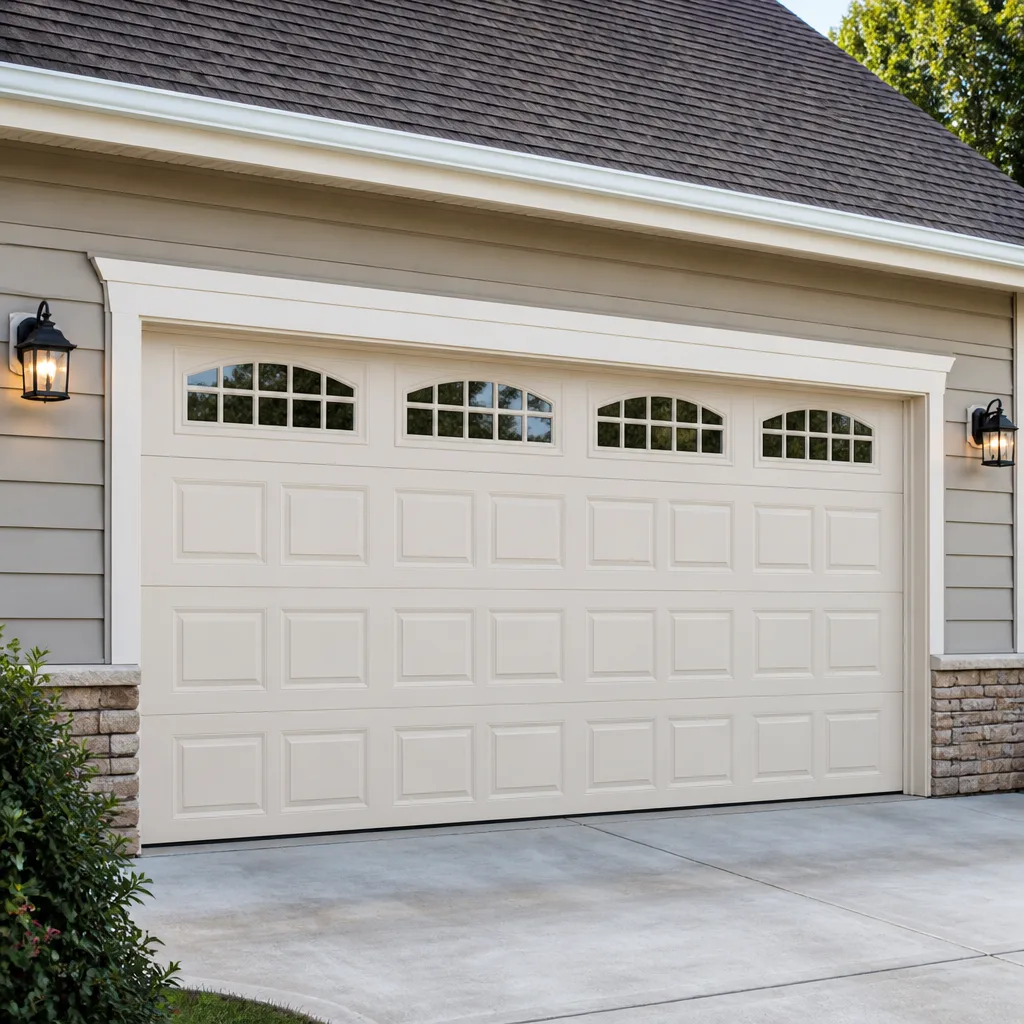 Raised-panel steel
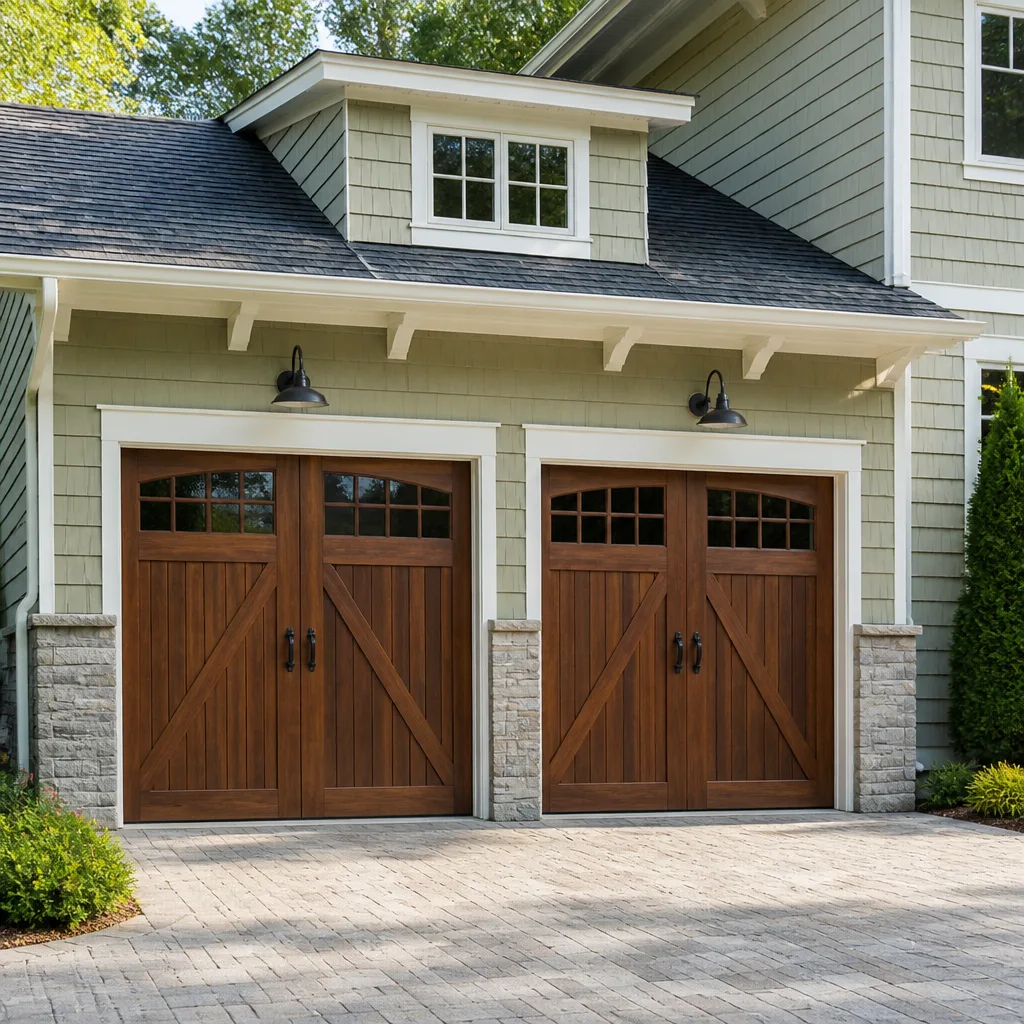 Carriage house
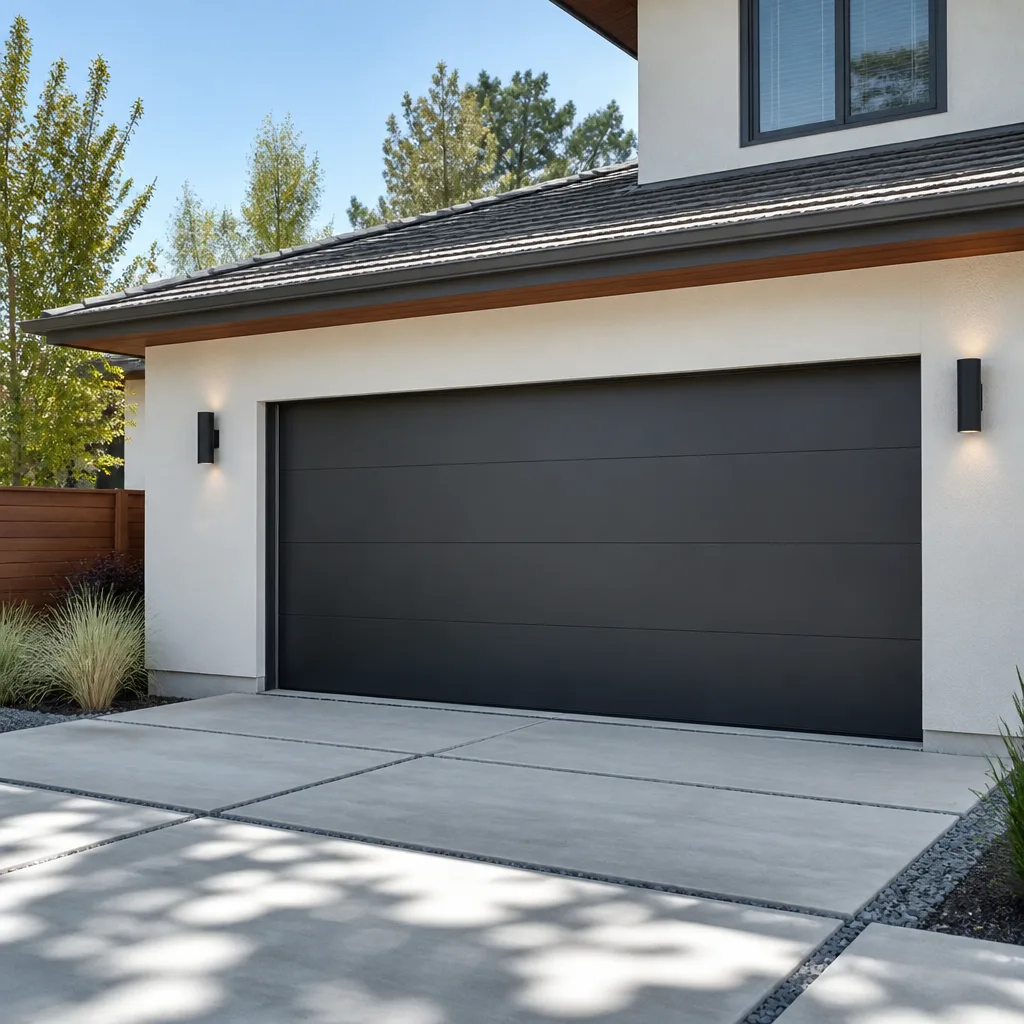 Modern flush
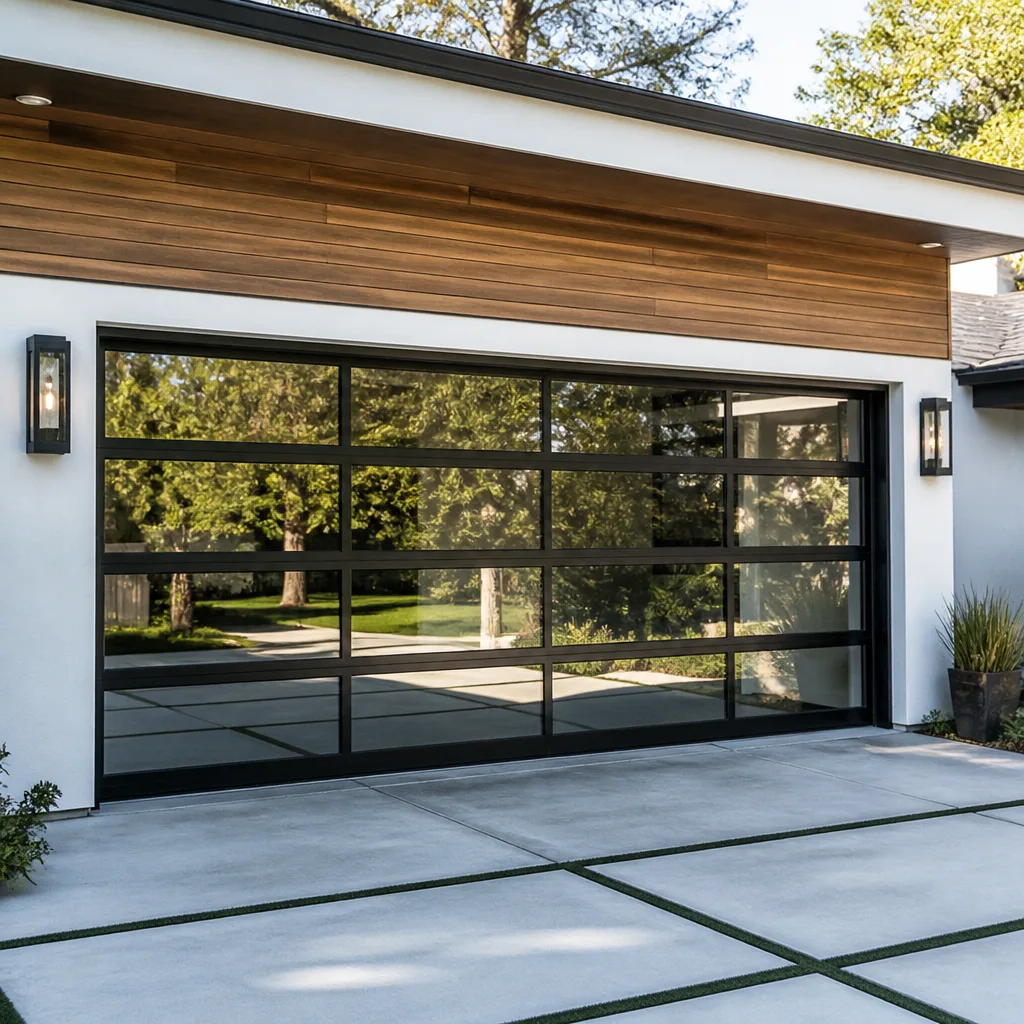 Full-view glass
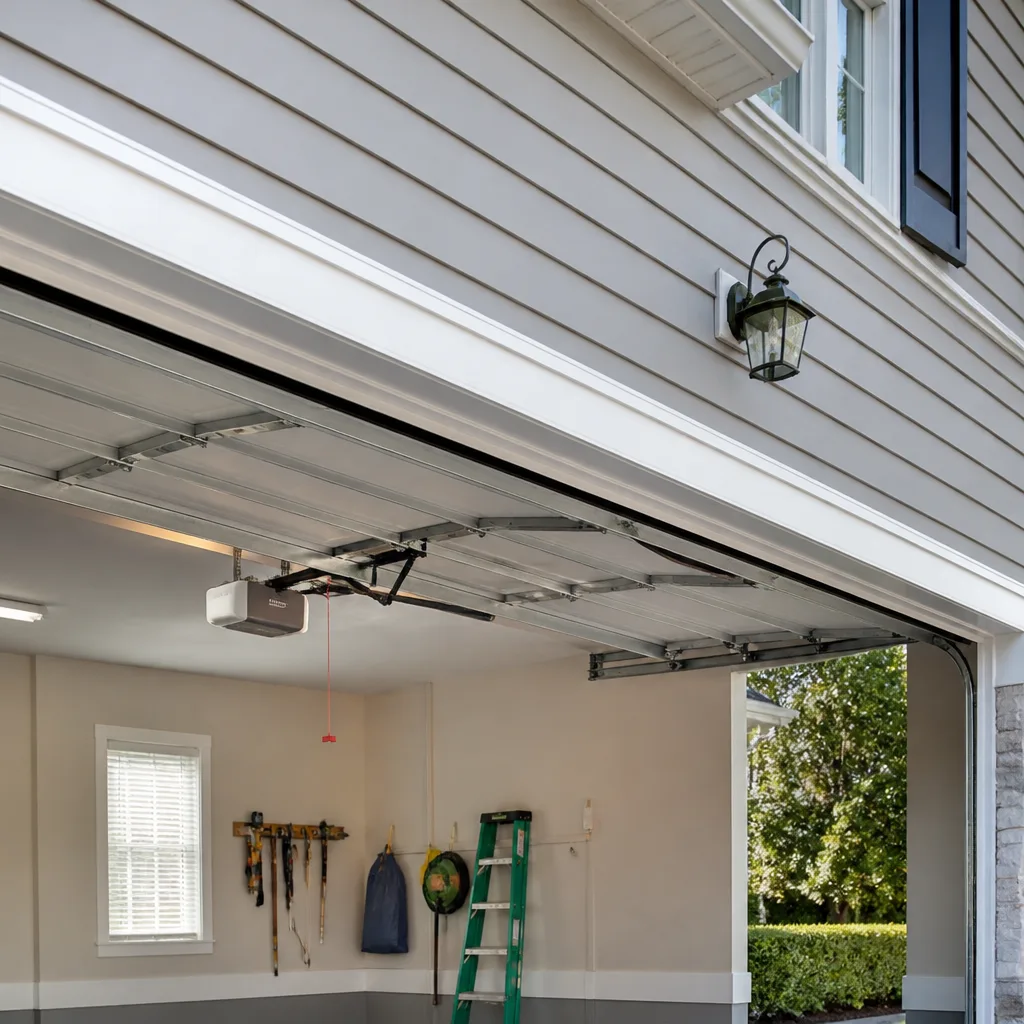 LiftMaster openers
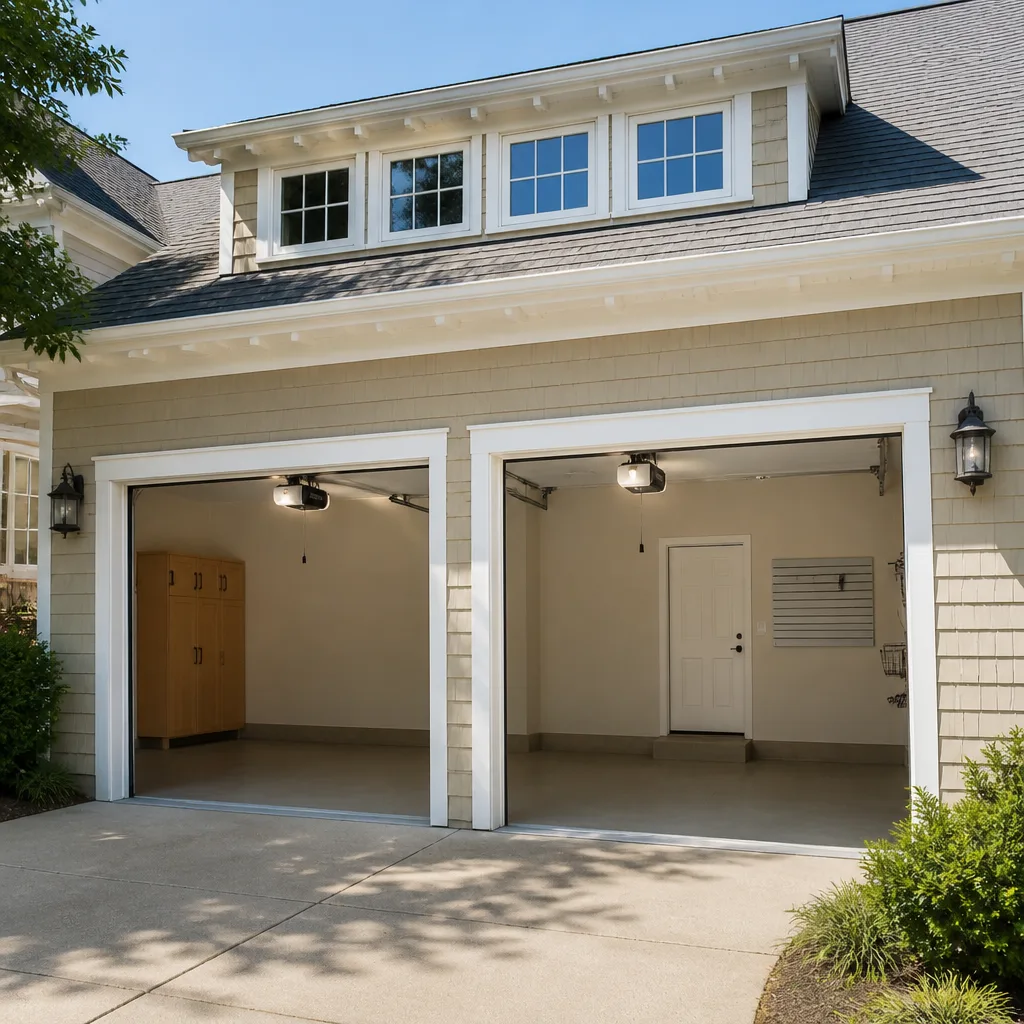 Chamberlain openers
Full 25-point door and opener safety check with every visit - springs, cables, rollers, tracks, and your LiftMaster or Chamberlain opener included
You get a price before we start. It does not change when the pro arrives.
Get your free estimateGarage Door Warning Signs: An Aurora Homeowner’s Reference Guide
The most dangerous garage door in Aurora isn’t the one that’s stopped working. It’s the one that’s still working. A door with a fatigued torsion spring can be one cycle away from letting 300 pounds of steel and glass drop without warning, and the only notice you get is a sound you’ve been hearing for weeks and dismissing as normal. Most homeowners wait for a door to fail completely before they call anyone. That’s backward. Garage door symptoms are a mechanical language, and each sound, movement, or gap points to a specific part in a specific stage of failure. This guide teaches you to read that language, so you know the difference between schedule service and stop using the door right now.
Quick Answer
Garage door warning signs in Aurora fall into three urgency tiers: cosmetic or nuisance signs (loose hardware, minor squeaks) that you can monitor and schedule service for; mechanical failure signs (uneven travel, slow movement, jerking) that need a professional within days; and safety emergency signs (a visible spring break, a door that reverses inconsistently, frayed cables, or a door that won’t stay up) that mean stop using the door immediately and call before something drops.
Styles & brands we work with
- Raised-panel steel
- Carriage house
- Modern flush
- Full-view glass
- LiftMaster openers
- Chamberlain openers
Table of Contents
- Why Your Garage Door Is Trying to Tell You Something
- The Symptom-to-Component Matrix
- The Three Signs That Mean Stop Using the Door Now
- Aurora Winter Symptoms vs. Real Mechanical Failure
- What Aurora Homeowners Face Across the City
- How to Photograph and Document Symptoms Safely
- What You Can Check Yourself vs. What Needs a Specialist
- When the Warning Sign Is in the Opener, Not the Door
Why Your Garage Door Is Trying to Tell You Something
A garage door is one of the few systems in your house with no display panel, no error code, no warning light. It communicates through sound and motion. That’s a problem because most of us tune out noise we hear every day. The moment a door starts to fail, the first sign is usually something you’d describe as “different, but I can’t say why.”
Here’s the structure worth understanding. Your door is a balanced system: springs counterbalance the door’s weight, cables connect the springs to the door, rollers ride in tracks, and the opener (or your arm) provides the push to get things moving. Every one of those components fails in a predictable order if it’s failing mechanically. The noise changes first. Movement changes second. Visible failure comes last, and by then you’ve usually lost the chance to fix the problem cheaply.
In Aurora, doors run hard. Our temperature swings are wide enough that a door can cycle from frozen shut in January to heat-stressed and expanding in July in the same spring-and-summer stretch, and every one of those cycles works the torsion spring under load. A standard residential torsion spring has a limited cycle life, and Aurora’s typical daily use (multiple openings, family leaving and returning) means springs actually do wear out on a predictable timeline. That’s why reading the signs early matters. A $200 – $350 spring replacement done before a door drops is a very different cost from a full panel replacement, a bent track, or a damaged car after a spring snaps under load.
If you’re already noticing something and you’re not sure if it’s serious, our garage door repair service starts with a diagnostic look before anyone touches a wrench. We’d rather tell you your door is fine than sell you a repair you don’t need.
How a Door Fails in Slow Motion
- Spring fatigue reduces lift assistance, so the opener works harder and the door feels heavier.
- Roller and hinge wear introduces slack and grinding that nothing except the door mechanism can cause.
- Cable stretch throws alignment slightly off, which shows up as uneven gaps at the floor.
- Track deflection from a misaligned door adds friction, which accelerates everything above.
- Opener strain from any of the above burns out gears or strips the travel screw.
- Full failure arrives when one more component can’t carry the strain.
Every stage above produces a symptom you can hear or see. The rest of this guide is about matching the symptom to the stage.
The Symptom-to-Component Matrix
When Aurora homeowners describe a problem to us over the phone, they usually name the symptom, not the part. That’s the right instinct, and we work backward to the component every time. Here’s the reference table we run in our heads when we walk into a garage. Use it to figure out which component your symptom is pointing at and how fast you should act.
- Grinding or scraping on the way up and down – Component: rollers, hinges, or the track itself. Urgency: schedule within days. Rollers that are worn or seized carve into the track and force the opener to work harder. Left alone, seized rollers usually mean a bent or gouged track and a bigger repair.
- Slow or labored movement, especially on opening – Component: torsion spring losing tension, or opener motor strain. Urgency: schedule within days. A door that opens slowly gets worse as the spring loses more tension. Once the spring goes, the door is unusable.
- Jerking, stuttering, or a door that catches partway – Component: cable binding, track misalignment, or a broken roller. Urgency: urgent. Jerking indicates the door is being forced past an obstruction, which puts load on parts that aren’t designed for it.
- Uneven gap at the floor – Component: cable stretch, hinge wear, or track alignment. Urgency: schedule within days. A gap also means weather intrusion and seals wearing faster.
- Door reverses immediately or bounces at the bottom – Component: travel limit setting, or the safety reverse (photo-eye) system. Urgency: urgent if it won’t stay closed. This is a real security and safety sign, and it’s almost always a setting or sensor issue a technician can resolve quickly.
- Loud bang, then door won’t open – Component: broken torsion spring. Urgency: emergency. See the next section.
- Squeaking or squealing – Component: dry rollers, loose hinges, worn bearings. Urgency: routine. Lubrication and hardware snugging usually resolves it, and this one is a homeowner-monitorable signal.
- Opener runs but the door doesn’t move – Component: broken spring, snapped cable, or opener gear failure. Urgency: emergency if the spring or cable is visibly broken.
If you read that table and found yourself checking two or three rows, that’s normal. Garage doors usually have more than one component wearing at the same time, which is exactly why our technicians arrive trained on the specific brand and model of door you own. A Clopay door and an Amarr door have different roller and hinge tolerances. A Wayne Dalton track behaves differently than a Craftsman-era install. Reading the symptom correctly depends on knowing the system.
The Three Signs That Mean Stop Using the Door Now
Most warning signs can wait for a scheduled appointment. Three cannot. If you see any of the following, stop using the garage door immediately. Don’t open it, don’t close it, and don’t let anyone else try. These are the situations where a door under load can drop without warning, and a falling sectional door weighs roughly 300 pounds.
- A visible spring break. Torsion springs run horizontally above the door, extension springs run alongside the tracks. If you can see a gap in the coil or a dangling end, the spring has failed. Torsion springs are under extreme tension and are genuinely dangerous to work on. There is no safe DIY path here. Leave the door exactly as it is.
- Frayed, kinked, or detached cables. The cables carry the spring’s tension to the door. A frayed cable can fail without notice and throw stored energy toward anyone standing nearby. If you see individual wire strands separating or a cable that’s clearly off its drum, close off the garage and call.
- A door that won’t stay up on its own. If you lift the door manually (with the opener disengaged) and it won’t hold position, the balance system has failed. That means whatever’s holding it up could let go. Don’t park under it, don’t test it repeatedly, and don’t force it up.
Your second question, right after “how bad is it,” is usually “how long until someone can come out.” Our Flagship Garage Door Repair specialists treat these three signs as emergency calls. For anything outside our dispatch window, we’ll be honest about timing and get you scheduled for the next opening.
Spring Failure: Why It’s Never a DIY Fix
We’re going to be direct here because it matters. Torsion springs store several hundred pounds of force, and releasing that force incorrectly can cause serious injury or death. There are no homeowner-safe tools that make this job safe, no walk-through that substitutes for proper winding bars and training, and no set of circumstances where a homeowner should try. If you suspect a spring is failing but haven’t seen a break, treat the door gently until a technician has looked at it. Our technicians have up to 10 years of experience with this exact component, and that experience is the entire point of hiring a specialist.
Aurora Winter Symptoms vs. Real Mechanical Failure
Every winter we take calls from Aurora homeowners convinced their door or opener is broken when nothing is actually failing. Winter does things to a garage door that mimic mechanical problems. Knowing the difference saves a service call in January and prevents you from ignoring something real in July.
What cold weather actually does to a garage door:
- Stiffness on the first cycle of the morning. Metal contracts, grease thickens, and the door feels heavier the first time you open it. If it loosens up after one or two cycles, that’s weather, not failure.
- Slower opener response. Cold-thickened lubricant and motor components that haven’t warmed up make an opener sound sluggish. If it smooths out, you’re fine.
- Seals that stick or tear. Bottom weather seals can freeze to the floor, causing a momentary hesitation. This is normal but worth inspecting for cracks at the end of the season.
- Photo-eye fogging or frosting. A door that reverses unexpectedly in the morning but works fine at midday is usually reading an obstructed photo-eye, not failing internally.
- Occasional pops and creaks on very cold days. These come from expansion and contraction of panels, not from the springs.
What winter does not cause:
- A door that stays stiff or slow through repeated cycles on a warm day.
- Grinding, jerking, or uneven travel that doesn’t resolve as the door warms up.
- Visible spring breaks, cable fraying, or gaps at the floor.
- An opener that works intermittently regardless of temperature.
The practical test: cycle the door two or three times on a mild day in early spring. If the symptoms are gone, they were cold-weather behavior. If they persist, they’re mechanical and you should schedule a diagnostic. Our Aurora winters are long enough that “my door always sounds weird in January” becomes a habit that hides a real sign by spring. Cycle and check. If you’re not sure, a garage door opener repair diagnostic often clarifies whether the door or the opener is the source.
What Aurora Homeowners Face Across the City
Garage door issues look different depending on the housing stock, and Aurora has a genuinely varied mix. Homes on the older established blocks near downtown frequently have original or mid-vintage doors with heavy steel or wood-clad panels, which means we’re often diagnosing spring and hinge wear on doors that have cycled an enormous number of times. Newer builds on the edges of Aurora typically have a modern opener installed with a lighter-weight insulated door, and the issue pattern runs the other way: openters that are misconfigured or operating near their rated limits, rather than older hardware wearing out.
If you’re in an Aurora neighborhood with a lot of attached garages and driveways that slope back toward the house, you’ll also see more water intrusion at the door seal, which accelerates bottom-seal wear and track corrosion. Homes with detached garages and unheated interior space see more seasonal contraction on the hardware but less thermal cycling on the automatic opener electronics. Both are fixable. The point is that where you live in Aurora shapes what you should watch for and how quickly you should react.
The other thing we want Aurora homeowners to know: garage doors are a functional part of home security. A door that doesn’t seal properly or a photo-eye that isn’t reading correctly is a real signal to address, not a nuisance to live with. We specialize in Aurora because the housing here demands it. Our technicians are trained on eight of the most widely installed brands in the market, and they arrive already familiar with your specific system rather than learning it on site. You can read more about the area we serve at Aurora.
How to Photograph and Document Symptoms Safely
If you’re going to call for a diagnostic, a few photographs and notes before the technician arrives will shorten the visit meaningfully. The reason is simple: most diagnostics involve standing back to watch a symptom occur, which means we spend a chunk of the appointment reproducing the problem. If we can see what you saw, we can often skip that step and get to the fix.
Here’s how to document without putting yourself at risk:
- Photograph the springs, cables, and tracks from outside the door’s path. Stand to the side, not underneath. Use your phone’s flash. Get one wide shot showing the whole door and one close-up of each spring and each cable end.
- Photograph the gap at the floor. Lay your phone flat or stand back and shoot along the bottom edge. Include a reference like a door frame so the technician can judge the gap size.
- Photograph the photo-eye sensors. Both of them, straight on. Note whether either lens is fogged, dirty, or blocked.
- Record a short video of the door opening and closing. Thirty seconds is enough. The motion pattern, sound, and timing help more than any description.
- Write down when the symptom started and whether it’s constant or intermittent. “Started three weeks ago, happens every morning but not afternoon” is genuinely useful information.
- Note the opener brand and model. Look on the opener housing for the label, or on the wall control. If you have a LiftMaster or Chamberlain, the model number is usually printed clearly.
- Don’t operate the door repeatedly to get a better shot. If any symptom looks like a safety emergency from the list above, skip documentation entirely and call.
Send the photos and video when you call. It’s the difference between a diagnostic visit that starts twenty minutes into the appointment and one that starts when the technician walks in.
What You Can Check Yourself vs. What Needs a Specialist
We’re not going to hedge on this. Some checks are homeowner-safe and some genuinely are not. Here’s the direct breakdown.
Homeowner-safe checks
- Visual inspection of the springs and cables from a distance. You’re looking for an obviously broken spring or a clearly frayed cable. That’s it. Don’t touch.
- Cleaning and aligning the photo-eye lenses. Wipe them with a soft cloth and check that they’re facing each other across the door opening. If the door works after, the eyes were the problem.
- Testing the safety reverse. With the door closing, wave an object through the photo-eye beam. The door should reverse. If it doesn’t, that’s a professional call, not a home fix.
- Lubricating rollers, hinges, and springs with proper garage door lubricant. This is routine maintenance. Use a garage door-specific lubricant, never WD-40 on springs.
- Visual check of the track for dents or obvious bends. Don’t try to bend a track back into shape yourself; you’ll usually do more damage.
- Tightening visible hinge bolts with a socket wrench if they’re loose but not stripped. Snug only. Don’t overtighten.
Specialist-only checks and repairs
- Anything involving torsion springs or extension springs. Plainly: don’t.
- Cable replacement or adjustment. Cables carry spring tension and fail dangerously if handled wrong.
- Track realignment. A misaligned track can be forced to look right while creating new stress points. It needs proper measurement.
- Opener gear, logic board, and force-limit adjustment. These are precision components. A Craftsman opener and a Genie opener require different force and limit settings.
- Panel replacement after impact or failure. Panel fit, color match, and track mounting all need manufacturer-specific parts.
- Anything that requires the door to stay open while you’re under it. This rule has no exceptions. Never place yourself underneath a door that’s being supported only by the opener or by a sagging spring.
When the Warning Sign Is in the Opener, Not the Door
Half the diagnostic calls we take in Aurora start with “the door is broken” and end with an opener issue. That’s because the opener gets blamed for everything the door does, and vice versa. Distinguishing them is worth learning.
- The door is heavy but the opener runs smoothly. That’s a spring or balance issue. The opener is doing its job against a door that’s fighting back.
- The door is light but the opener stops or reverses partway. That’s an opener force limit, travel limit, or gear problem.
- You hear the opener motor but the door doesn’t move at all. Often a stripped opener gear or a broken spring. Almost never the remote.
- The door works from the wall button but not the remote. Remote battery, remote programming, or the opener’s radio receiver. All opener-side.
- The door only closes when you hold the wall button. That’s a photo-eye obstruction or a wiring fault. This is a safety system doing exactly what it’s supposed to.
Recognizing these distinctions is why we handle opener repair as a standalone service rather than a footnote to door repair. Your opener is a precision mechanical system with its own diagnostics, its own brand-specific settings, and its own failure modes. If your symptom points at the opener rather than the door, that changes which tools the technician brings and how the appointment is planned.
Common Mistakes to Avoid
- Ignoring a slow door because it “still works.” A slow door is a spring that’s losing tension. It will fail, and the day it fails your door may drop 300 pounds of steel without warning. The cheap fix is now. The expensive fix is after.
- Spraying WD-40 on the springs or tracks. WD-40 is a solvent, not a lubricant. It attracts dust, dries out the spring coils, and can actually accelerate wear. Use a garage door-specific lubricant, and never lubricate the track surface your rollers ride on.
- Adjusting the opener’s force limit to “make it work.” If your door is jerky and you crank up the opener’s force, you’ve told the opener to force a failing door past an obstruction. This is how opener gears strip and how doors get bent out of track.
- Assuming cold-weather stiffness is mechanical failure in Aurora. January stiffness that smooths out after two cycles is normal. Stiffness that doesn’t smooth out is not. Test on a mild day before you panic.
- Trying to fix a track that’s out of align by bending it back. A bent track plus a forced alignment equals a door that leaves its rollers mid-travel. That’s a specialist repair.
- Letting a small floor gap wait until “next season.” In Aurora’s winters, a small gap lets in cold air, moisture, and rodents. The bottom seal wears faster and the cost goes up.
- Calling for a repair when what you actually need is an installation. If your door has had three repairs in two years, the math has shifted. A specialist can tell you whether repair or replacement is the right call before you spend on the wrong one. That’s the full-lifecycle view we build our service around.
See the difference
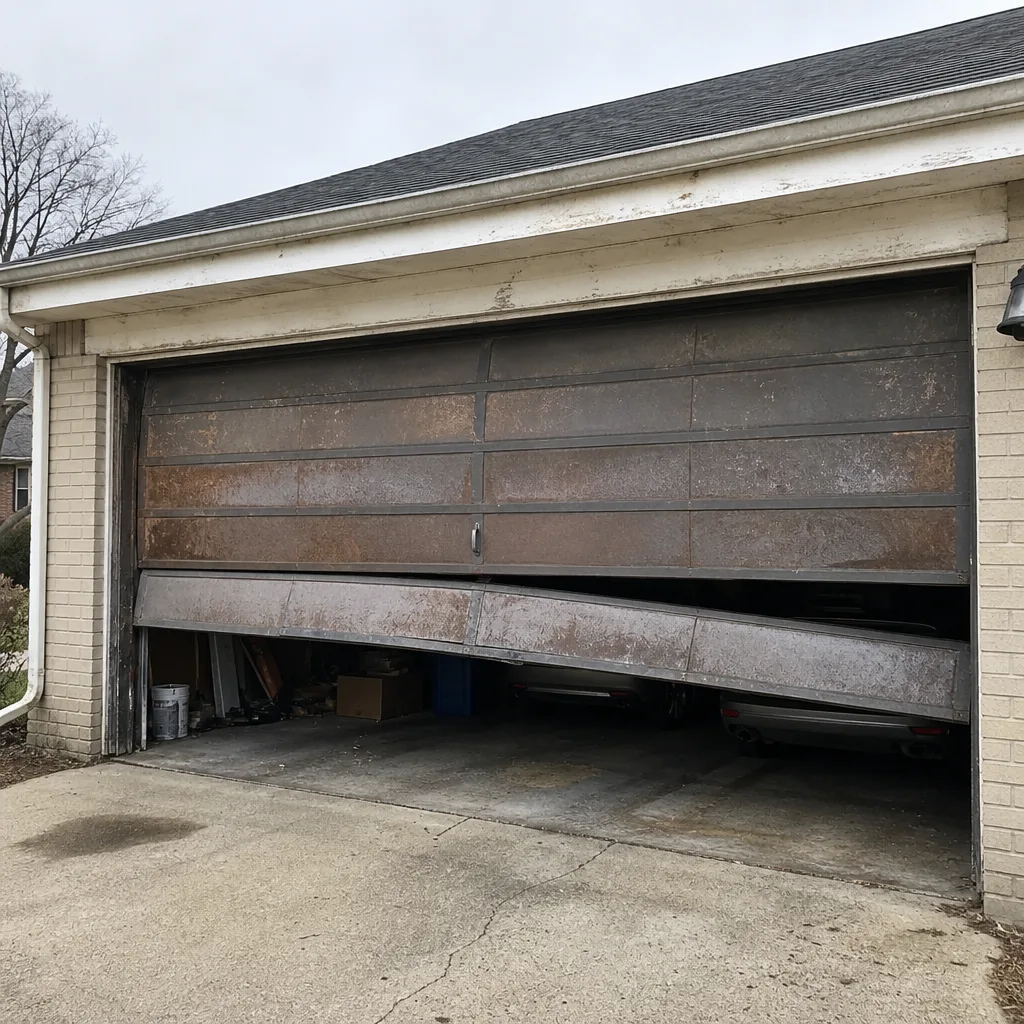 Before
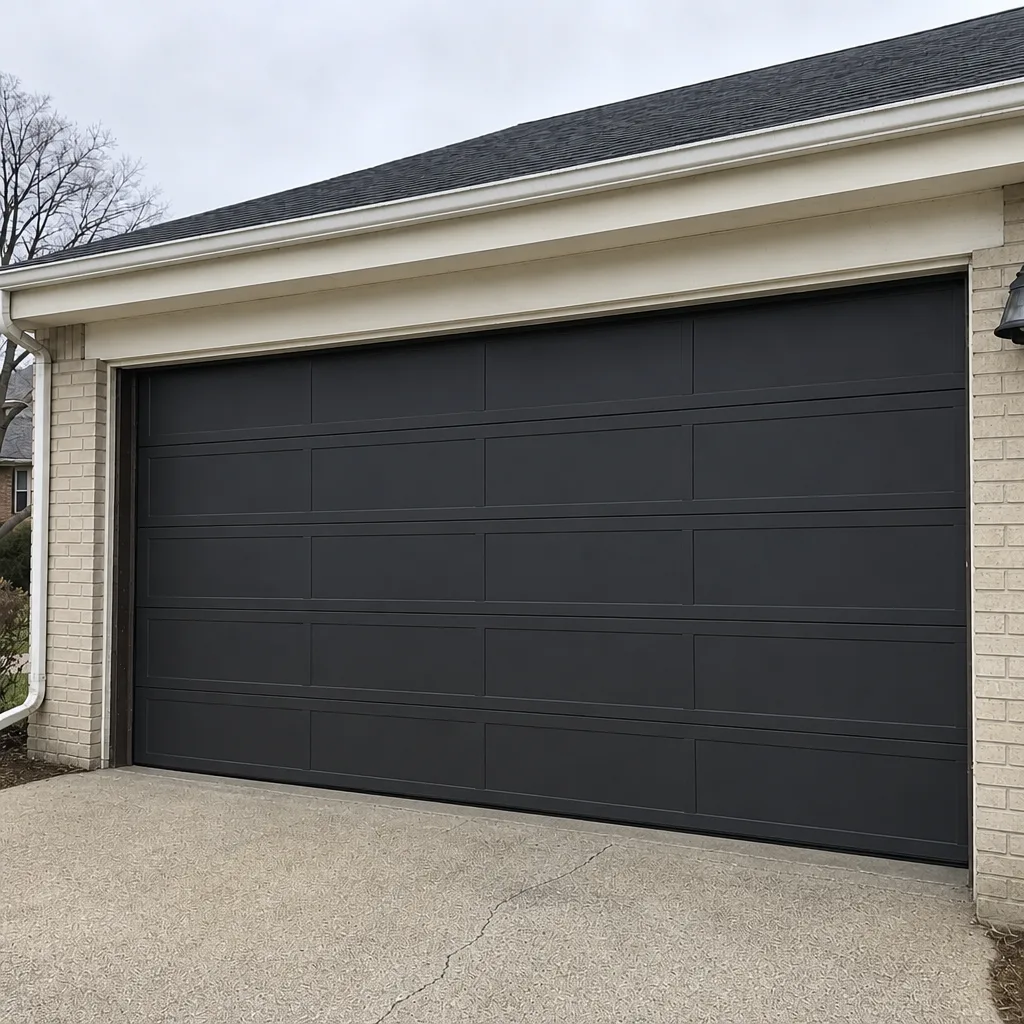 After
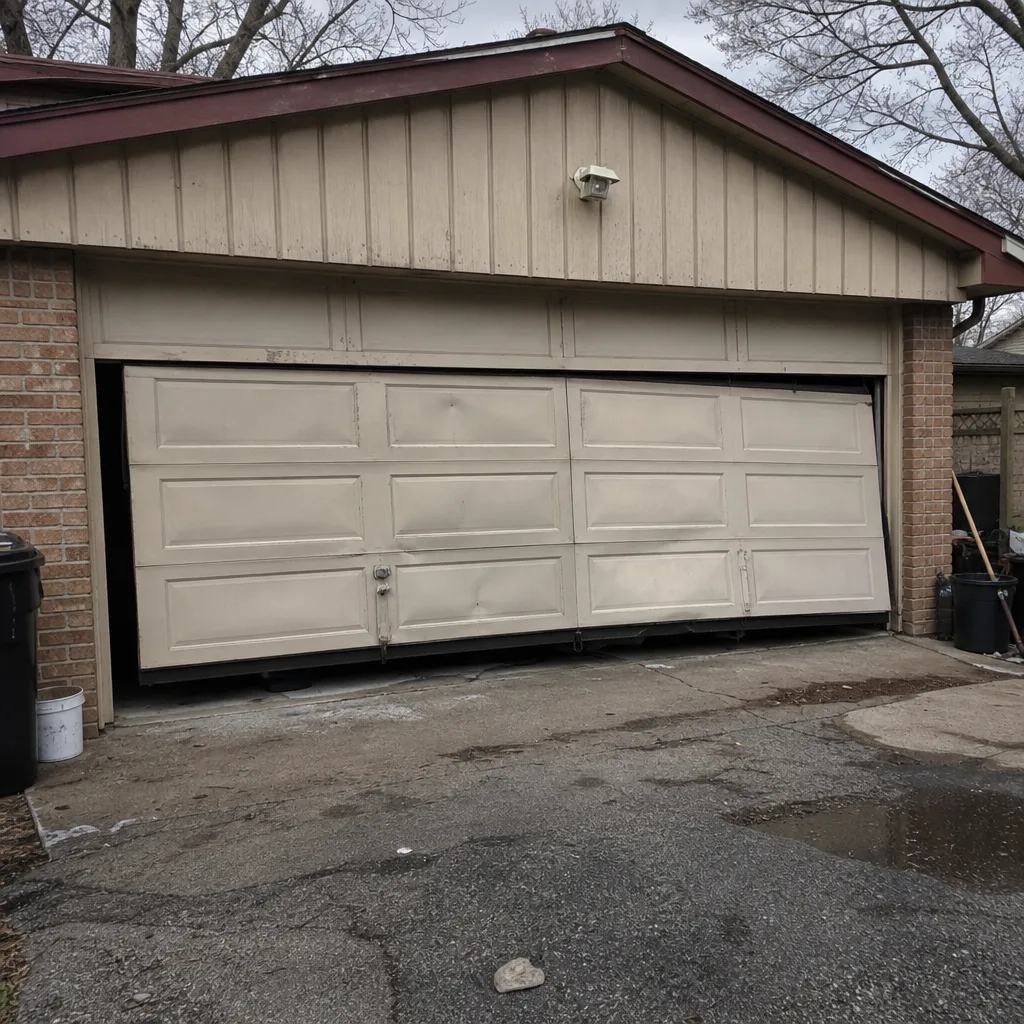 Before
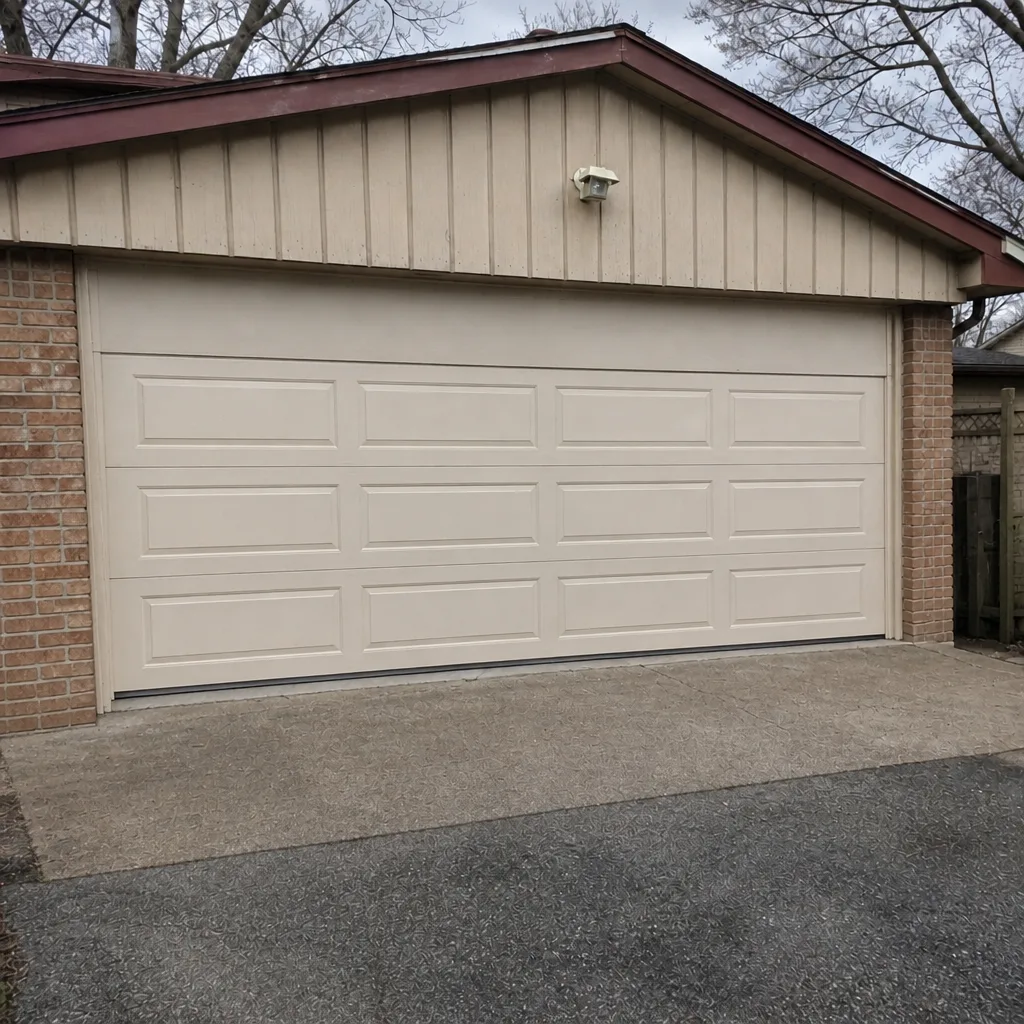 After
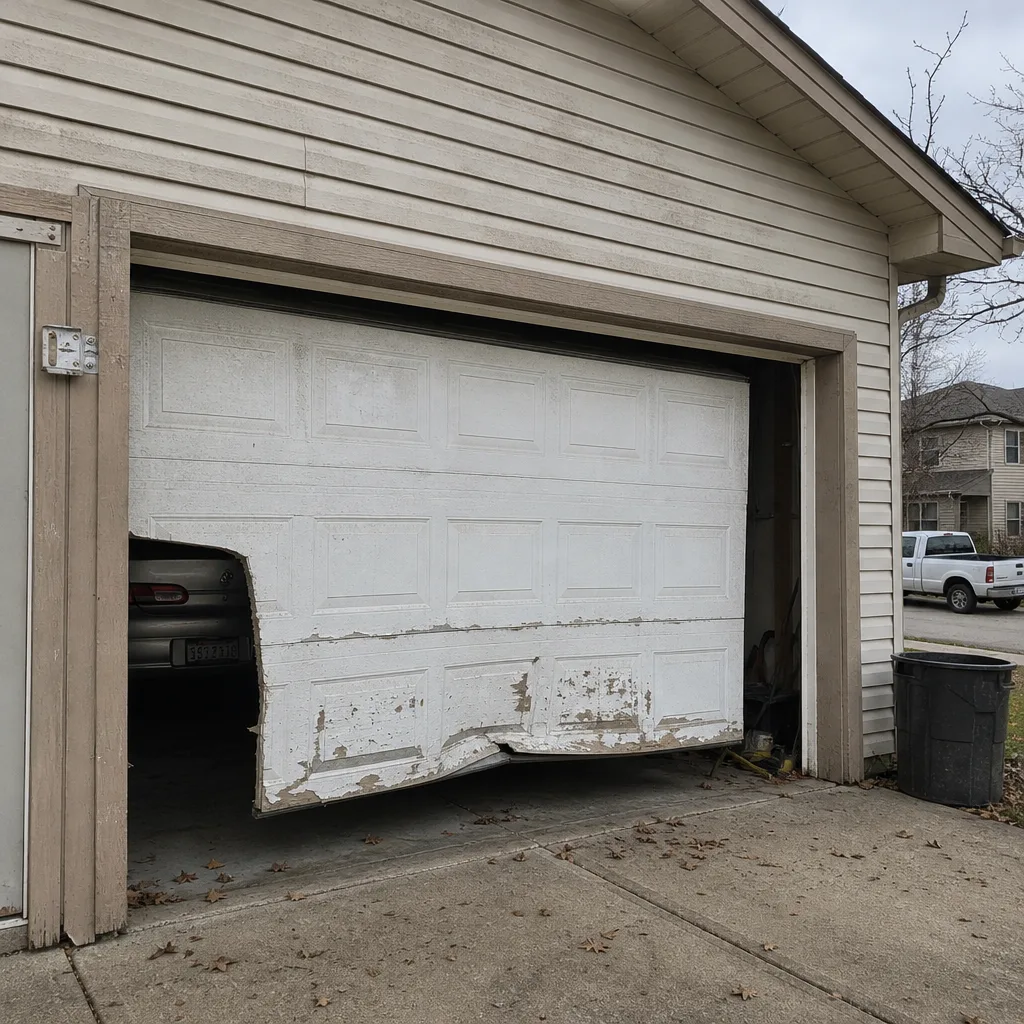 Before
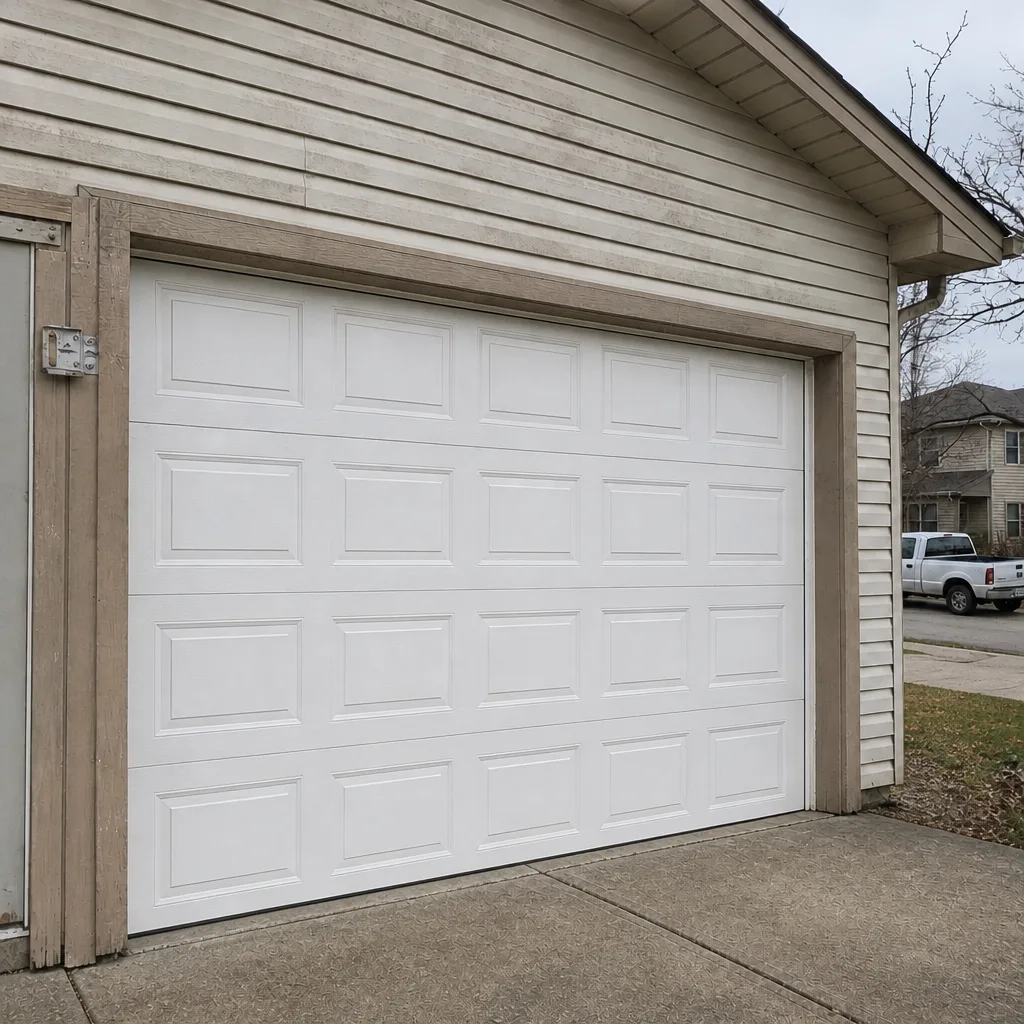 After
When to Call a Professional
Call a professional when any of the safety signs on the stop list is present, when a symptom persists through multiple cycles on a mild day, or when the same door has needed more than two repairs in recent seasons. Call when your door won’t stay up, reverses inconsistently, or shows visible spring or cable damage. Call when your opener runs but the door doesn’t. And call when you’re not sure, because “I’m not sure if this is serious” is the most common reason Aurora homeowners reach us, and a diagnostic visit resolves that faster than worry does.
Flagship Garage Door Repair offers free estimates in Aurora, call (866) 983-4312. We answer 24/7, with fast dispatch from 7am to 7pm, Sunday through Friday. Our Flagship Garage Door Repair team specializes in exactly three things: garage door repair, garage door opener repair, and installation. That focus is why our technicians are already familiar with your specific door and opener before they walk in.
Frequently Asked Questions
The most serious sign is a visible broken torsion spring, followed closely by frayed cables and a door that won’t stay up on its own. All three mean stop using the door immediately. Torsion springs are under extreme tension and a door in that condition can drop without notice. Call a specialist before cycling the door again. Call (866) 983-4312 for a diagnostic visit.
Cycle your door two or three times on a mild day. If the stiffness, slowness, or noise resolves after the first cycle or two, it’s Aurora winter behavior, not mechanical failure. If it persists through every cycle on a warm day, it’s mechanical and worth a diagnostic. Cold weather causes temporary stiffness. It doesn’t cause grinding, jerking, or uneven travel.
No. There’s no safe homeowner method for torsion spring replacement. These springs store hundreds of pounds of force, and releasing that force incorrectly has caused serious injuries and worse. This is the single most important “do not DIY” call in this guide. Call (866) 983-4312 and let a trained technician handle it.
Usually a broken spring, a snapped cable, or a stripped opener gear. If you hear the motor run and see nothing move, look for a broken spring or visible cable damage first. If those look intact, the opener gear is likely the issue. Either way, it needs a technician to diagnose. Call (866) 983-4312 for an opener or door diagnostic.
Spring life is measured in cycles, not calendar years, so nothing can tell you precisely how long yours will last. What we watch for in Aurora is the daily opening and closing pattern: a family using the door several times a day wears a torsion spring faster than a single-occupant household. When you notice slowness or a change in sound, have a technician check the spring tension rather than waiting for it to break and drop the door.
A slow door is a warning sign, not a sign of age. Slowness means the spring has lost tension or the opener is fighting something. If nothing is done, one of those two things fails outright the next time the system is under load. A quick diagnostic tells you which one and what the fix is. Call (866) 983-4312 for a free estimate in Aurora.
The Bottom Line
Garage door warning signs are a language with three tiers, and most homeowners only respond to the loudest tier. That’s the wrong approach. The signs that stop you cold are the ones where you’ve already lost the chance to fix things cheaply. Read the quiet signs: the grind, the slowing, the jerking, the floor gap. Treat them as mechanical communication, not background noise. Test for cold-weather versus real failure on a mild day. Photograph what you see before you call. And never, under any circumstances, work on a torsion spring yourself. A garage door in Aurora isn’t just a convenience or a security feature; it’s the largest moving system in your home, and it deserves a specialist. Whether you’re reading signs on an older door or planning a full replacement, the diagnostic process is the same. Call (866) 983-4312 for a free estimate from the team at Flagship Garage Door Repair. We answer 24/7, with fast dispatch from 7am to 7pm, Sunday through Friday.
Written by the team at Flagship Garage Door Repair.